I built an AI that watches TikTok and shops Instacart
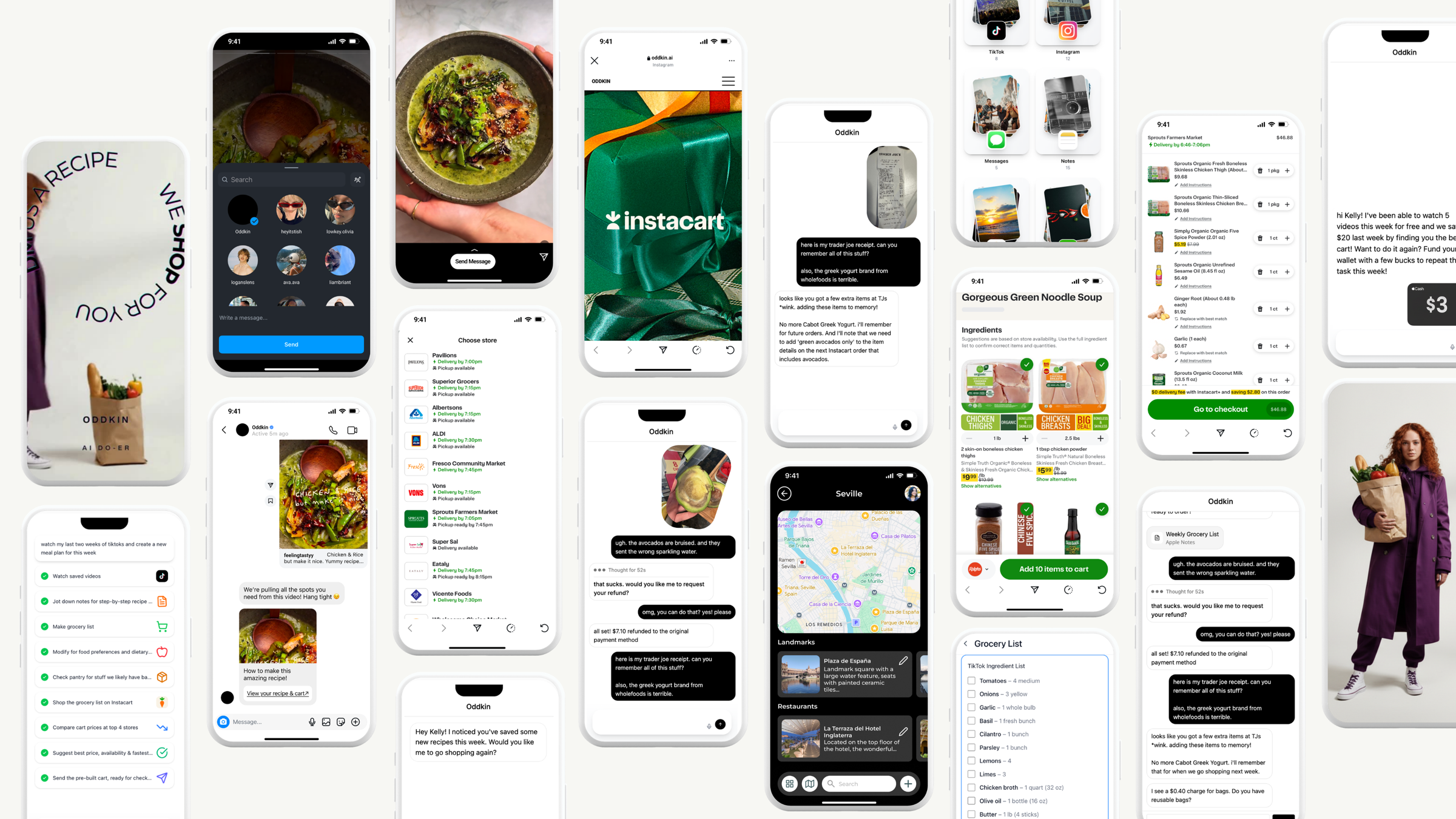
project_AITE is an attempt to close the gap between the dozens of TikTok recipes I save while scrolling and the grocery ordering and meal prep I actually do on the weekend.
The problem
It's time to think about dinners for the week and order groceries. Here is what stands between me and the new, interesting recipes I bookmarked on TikTok. Find the recipe again — there is no search. Re-watch the video several times to screenshot the key moments. Write down the ingredient list and how to assemble the meal. Cross-reference what's already in my kitchen. Build a list, pick a store, compare prices, get it delivered, and do a bit of meal prep.
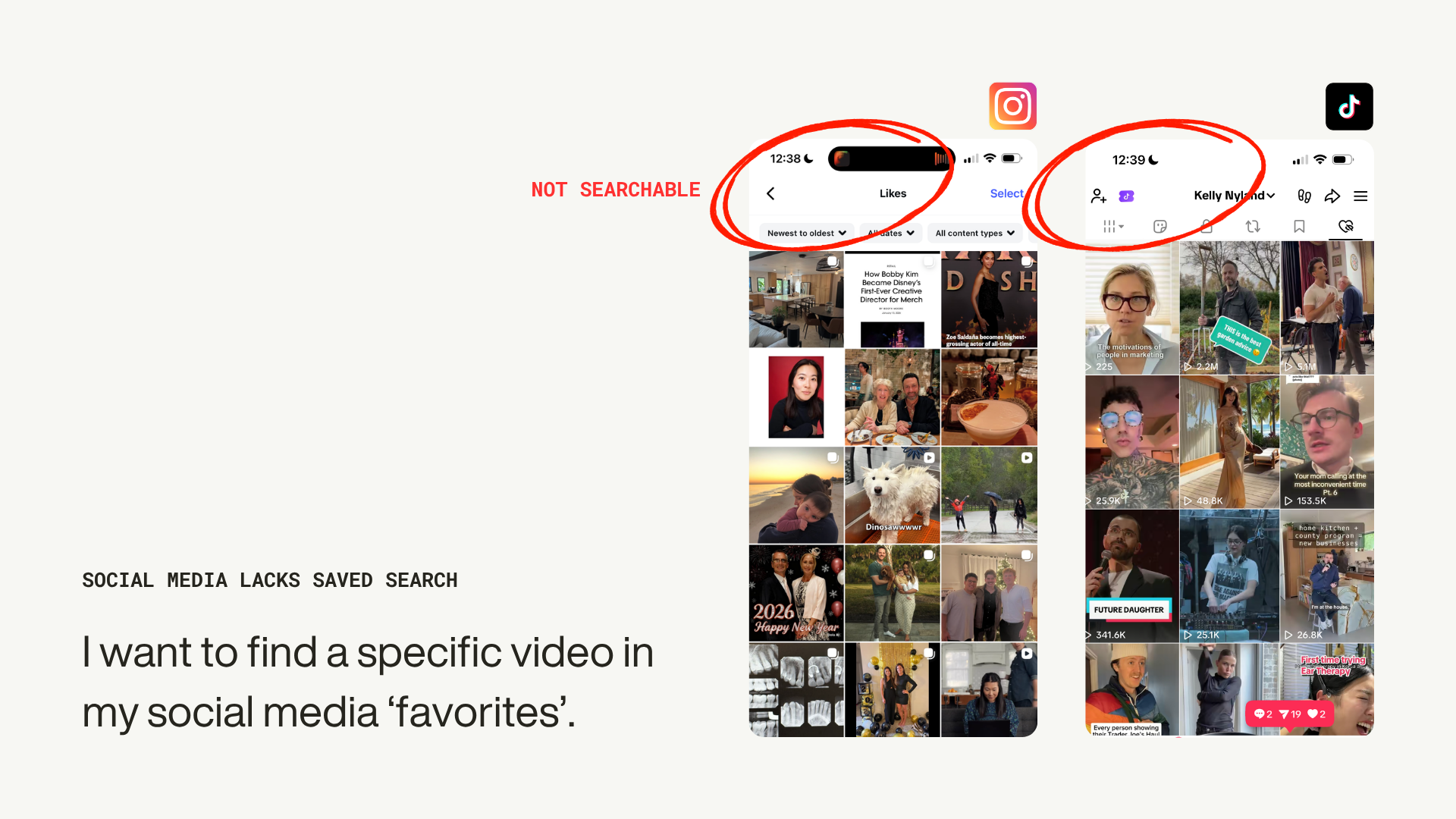
The first step is the one that breaks. Social media has no saved search. Hundreds of recipes accumulate in Instagram Likes and TikTok favourites, and there is no way to find a specific one again. Intent is captured and then stranded.
The solution
A personal, agentic workflow that watches recipe videos and returns a shoppable, preferences-aware cart. Built as a personal prototype, triggered from an iOS shortcut, running through Memories.ai, Claude and Instacart.
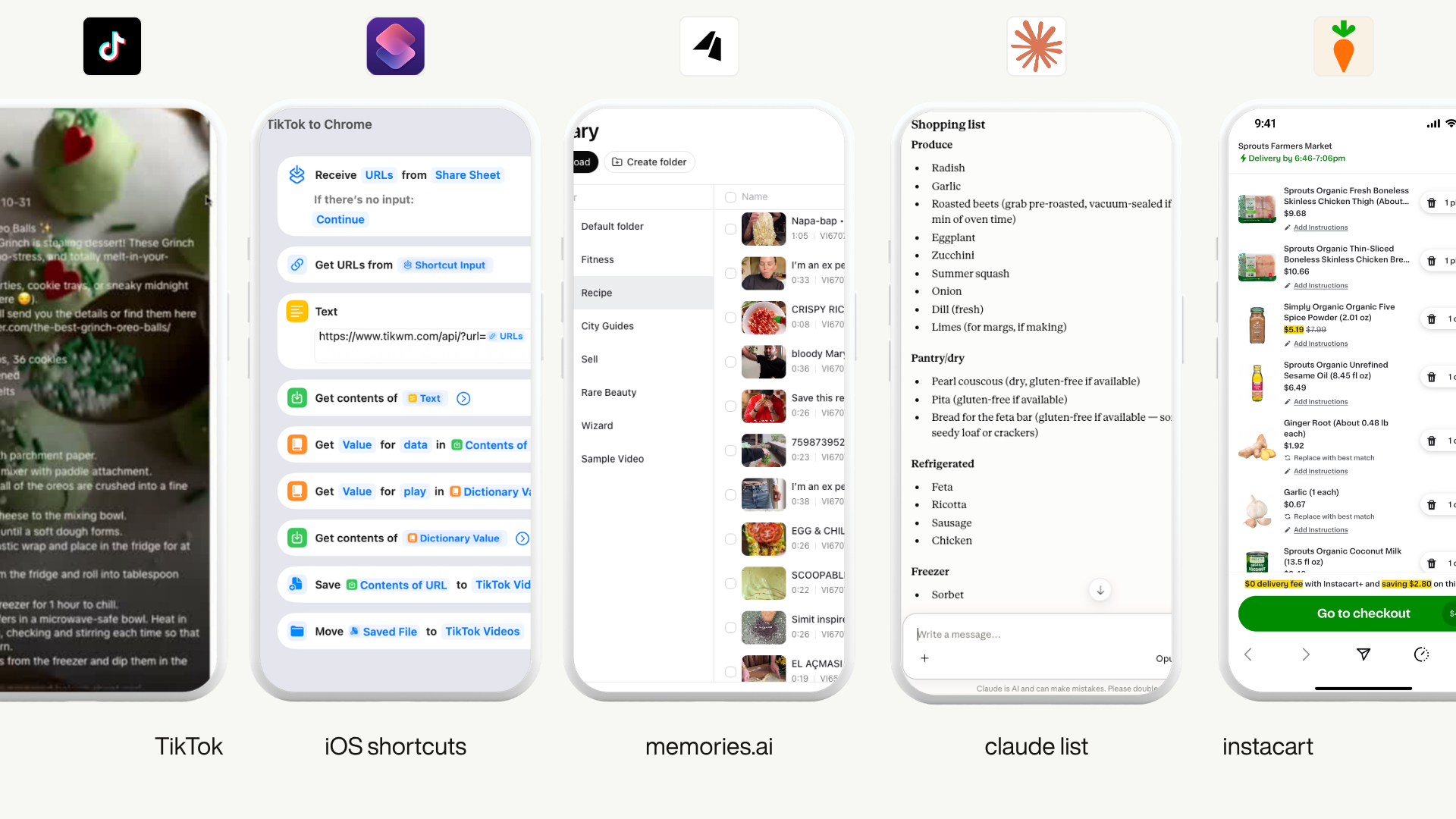
It works, with caveats. It gets me a cart I'd mostly have built myself, and it takes about four minutes instead of forty. It still misses keyframes, so if a recipe has a technique step I have to go back to the video. It doesn't know what's already in my pantry unless I tell it. It's a prototype held together with an iOS shortcut and stubbornness. But it is a solution, built for an audience of one, that closes the loop.
Exploring this solution at scale
What would it take to make this real for every consumer who wanted to download an iOS app? Start with what is possible today.
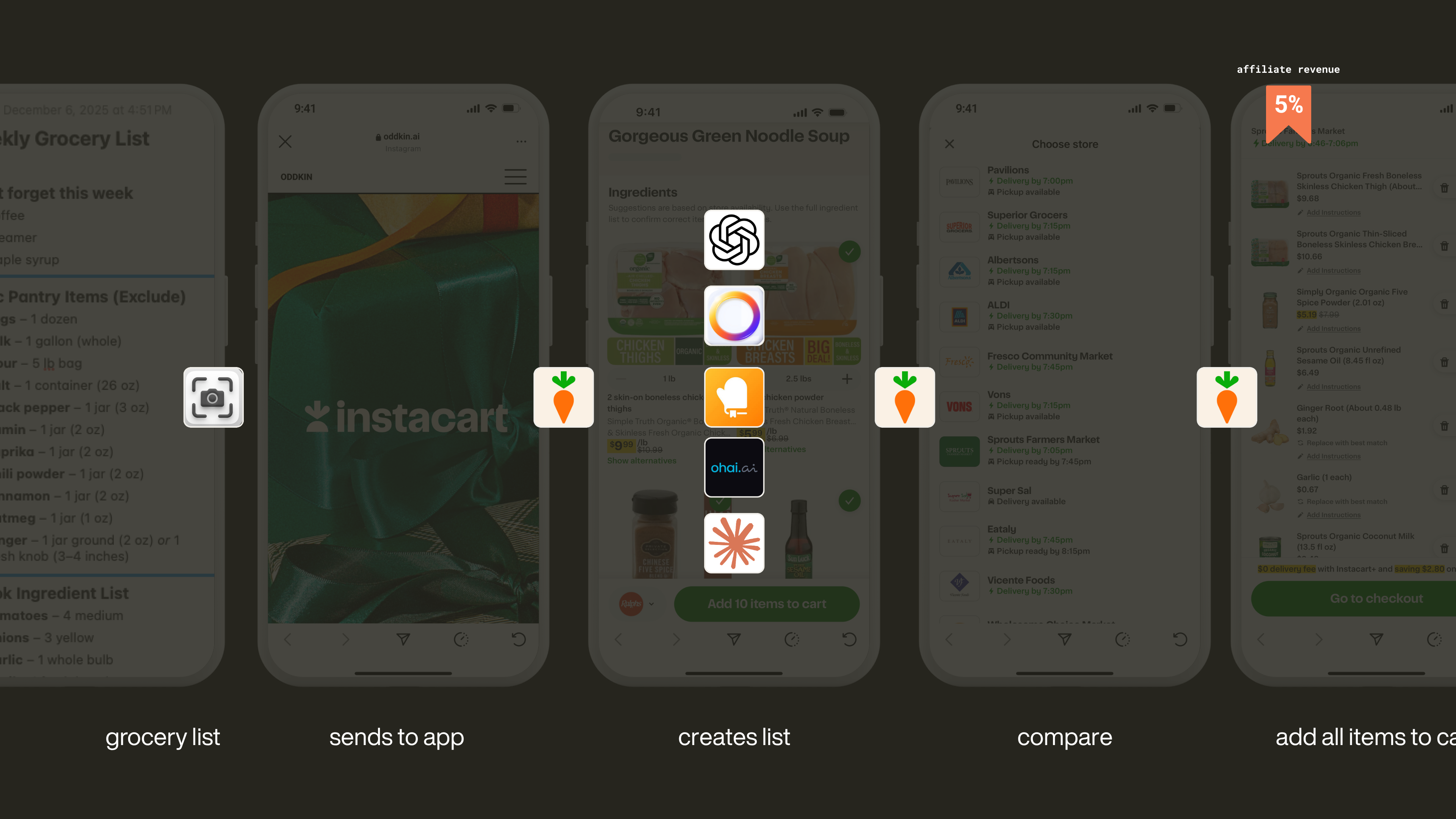
ChatGPT and Instacart have built a genuinely handy partnership. After multiple attempts to get it to work for me, I gave up and switched platforms.
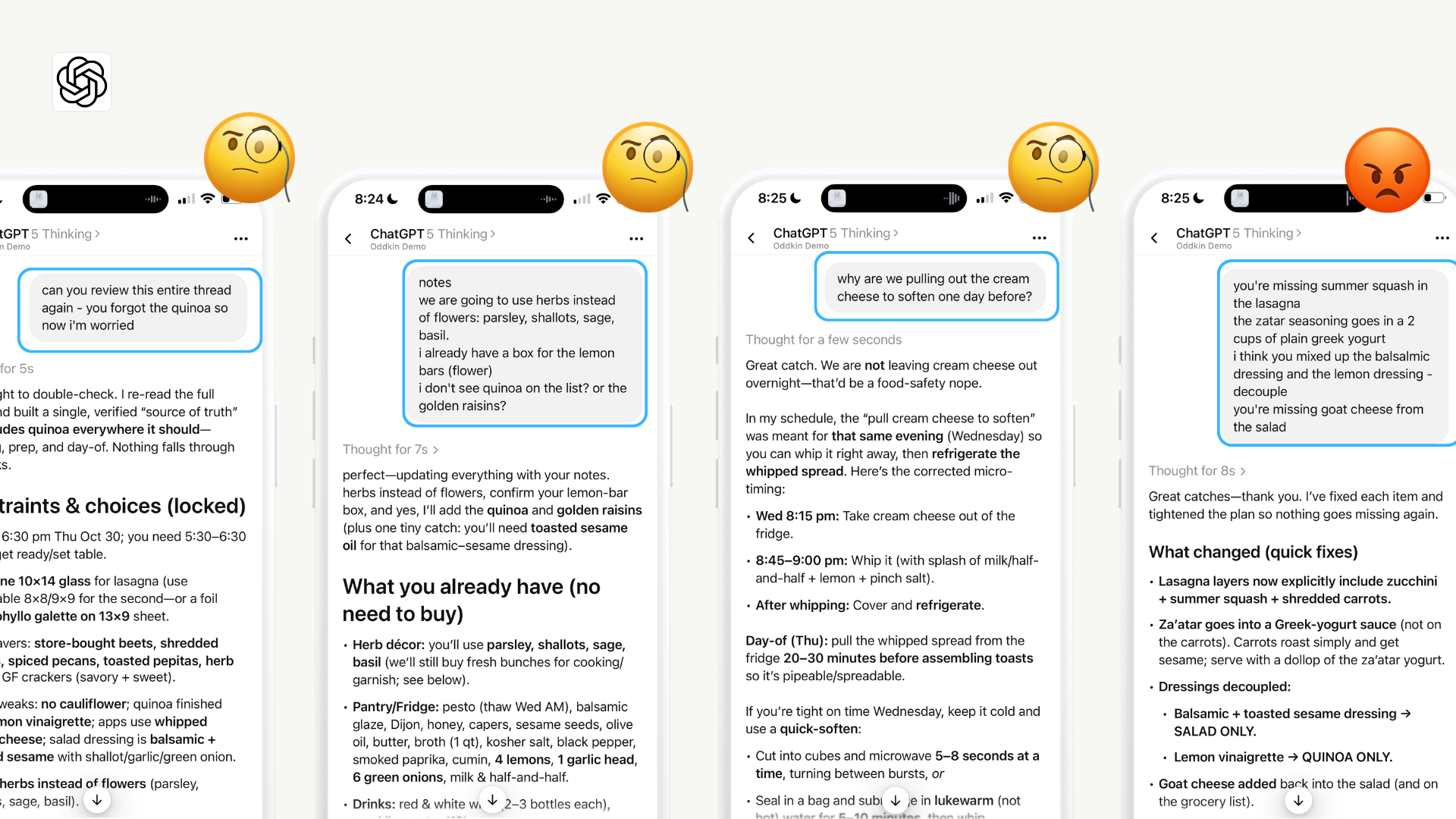
I spent a long thread with ChatGPT and Instacart trying to plan a girls dinner. It failed in ways only someone who actually cooks would catch:
- It left a key ingredient, summer squash, out of the vegetable lasagna.
- It dropped the quinoa entirely, then dropped it again after I asked it to re-check.
- It told me to pull cream cheese out to soften the day before, which is a food-safety problem, not a prep step.
- It conflated the balsamic dressing and the lemon dressing into one.
ChatGPT consistently failed, and left me to remember what it was forgetting. Claude just works better for me. I don't pretend to know exactly why — the memory persistence seems better.
Easy web app builders, once the content is collected
Now that anyone can code, it's easy to make a personal app once you've collected the content. There are any number of programs that will do this. But the content doesn't refresh unless you schedule tasks inside your agent.
A personal, mobile chat agent
If you have seen my Oddkin project, you will know I have been working on a concept for agents that bridge the physical and digital gap in personal life.
For agents to be useful in our personal lives, they need access to the information already on our phones, and the ability to navigate across multiple apps and multi-turn decisions. Claude Code can already do this when it is building or fixing an application. Nothing does it for dinner.
The chat script, end to end
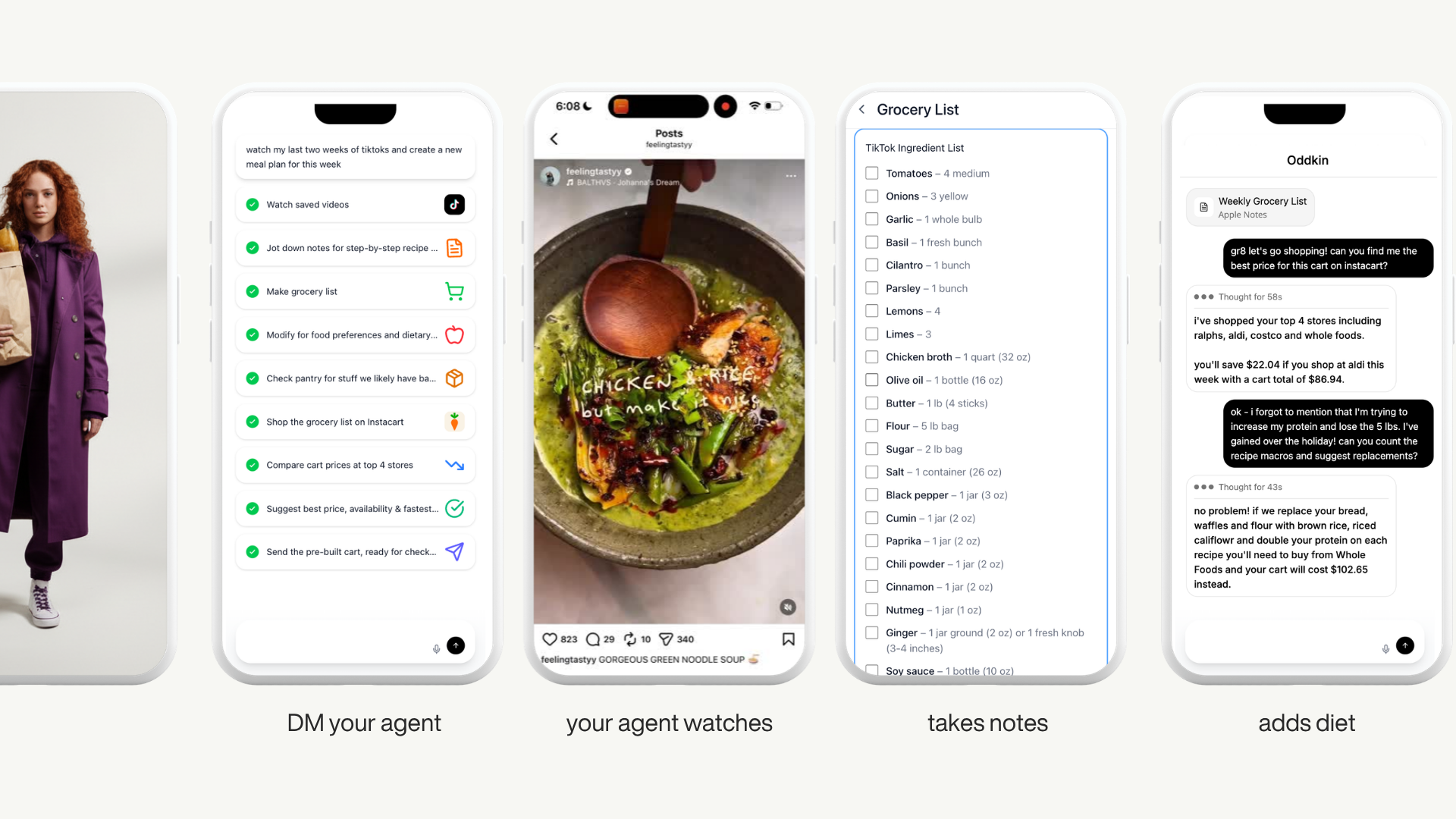
Watch and plan. One instruction — watch my last two weeks of TikToks and create a new meal plan for this week — turns the saved folder into a queue: watch the videos, take step-by-step notes, build the list, modify for dietary restrictions, check the pantry, compare prices across my top four stores, send a pre-built cart. On this run it shopped Ralphs, Aldi, Costco and Whole Foods and offered a cost-saving alternative.
Re-shop. Halfway through I remembered a constraint I never stated: I'm trying to increase my protein and lose the 5 lbs I gained over the holiday — can you count the macros and suggest replacements? It swapped bread, waffles and flour for brown rice and riced cauliflower, doubled the protein per recipe, and moved the cart to Whole Foods.
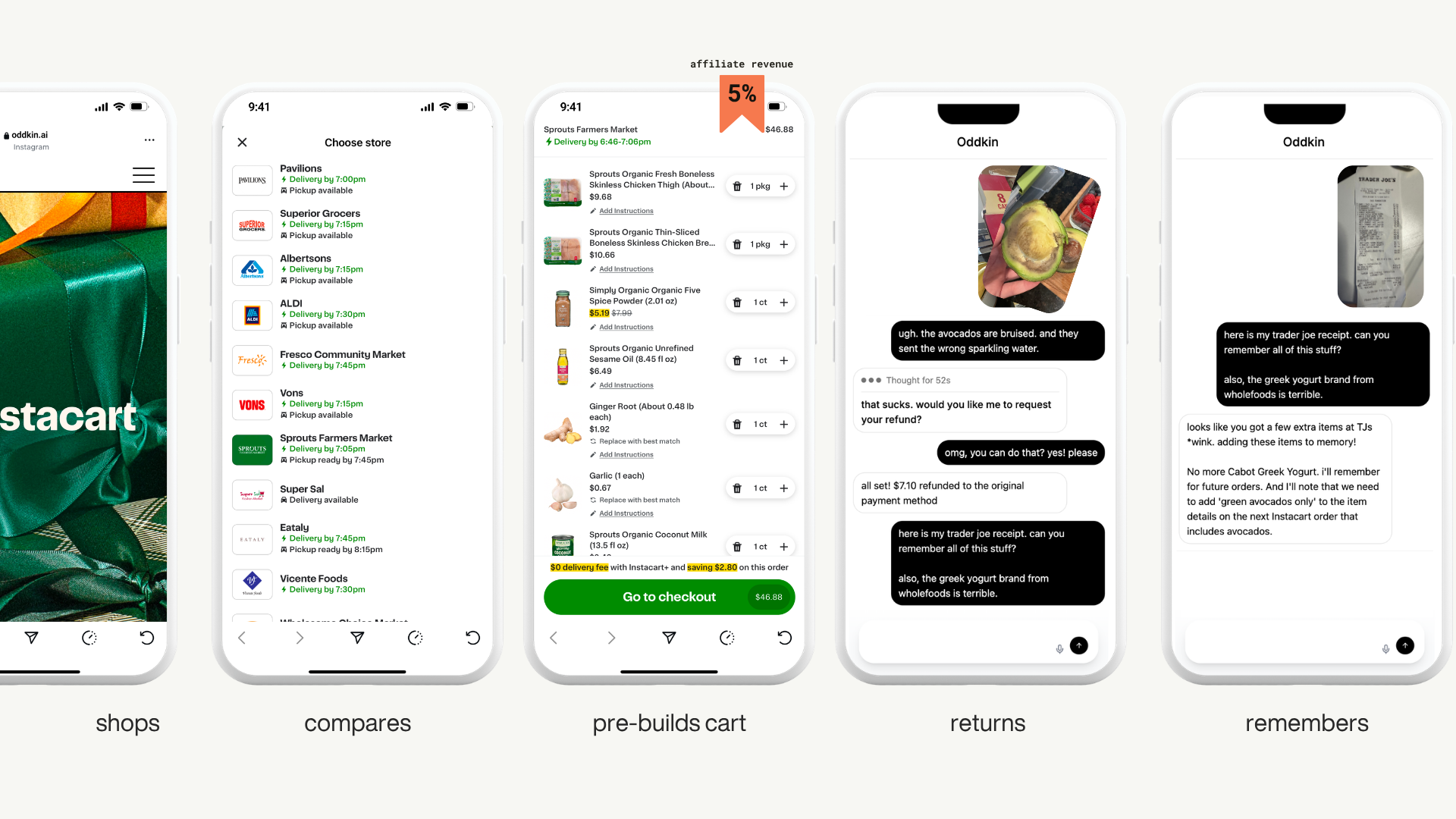
Click through the chat prototype in more detail or watch the video walkthrough.
What must the computer actually do?
Barring a custom workflow built on n8n, this is the best tool I have found for extracting videos.
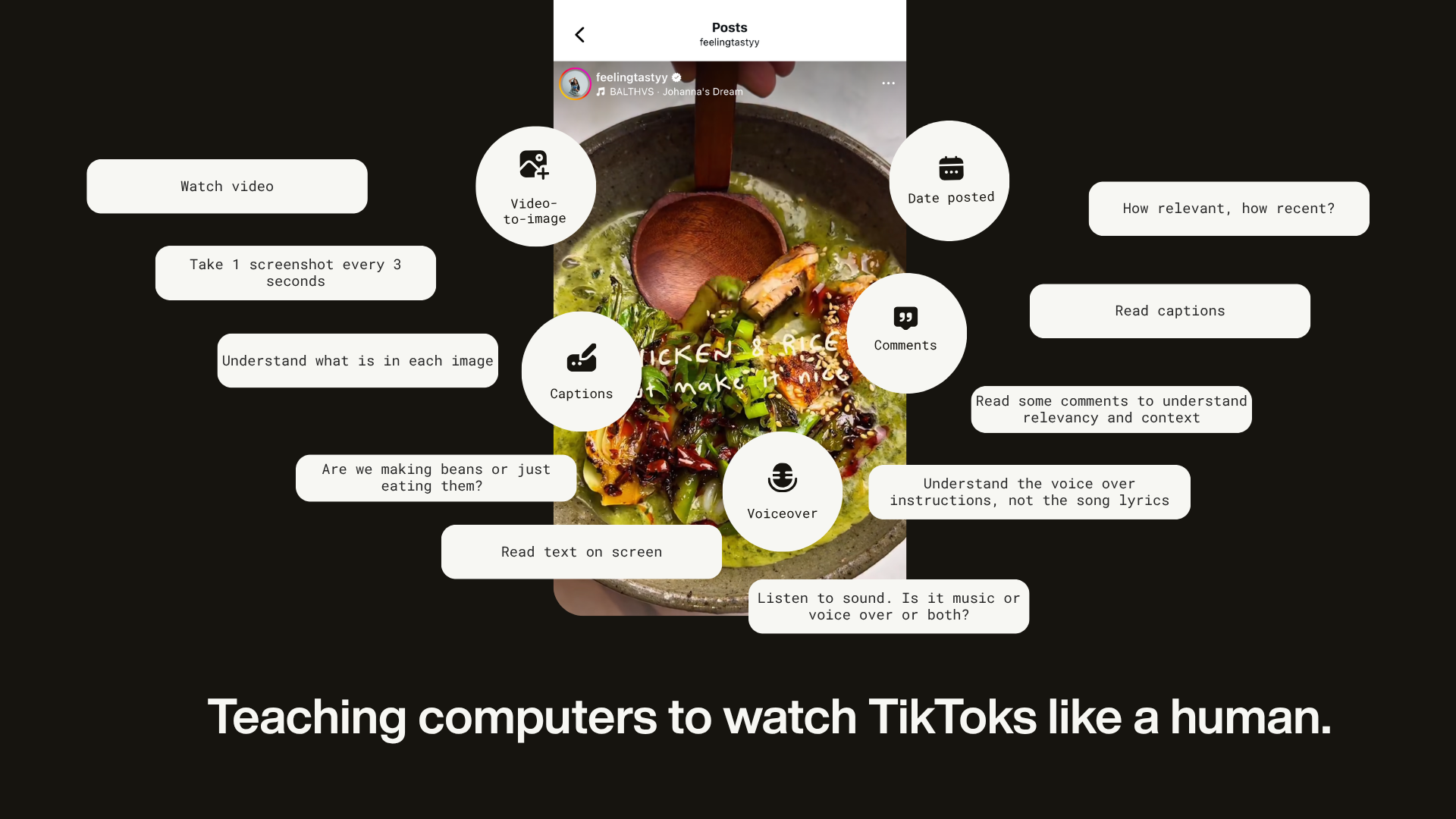
To watch a video the way a person does, the agent has to take a screenshot every three seconds and understand what is in each frame — are we making beans or is this a photo of my dinner before eating them during a girls night out? — read the on-screen text and the captions, read enough comments to judge relevance and context, check how recently it was posted, and listen to the audio well enough to tell voiceover instructions from song lyrics. Seven expensive computer capabilities that humans do without thinking about it.
At the time I explored this, Memories.ai did not capture key frames — which means the user still has to go back to the video to see how the recipe goes together.
Bring your agent into your DMs
What if you could bring that agent into your DMs as a user? It removes a step and leans on a behaviour we already have — sharing things with friends and family.
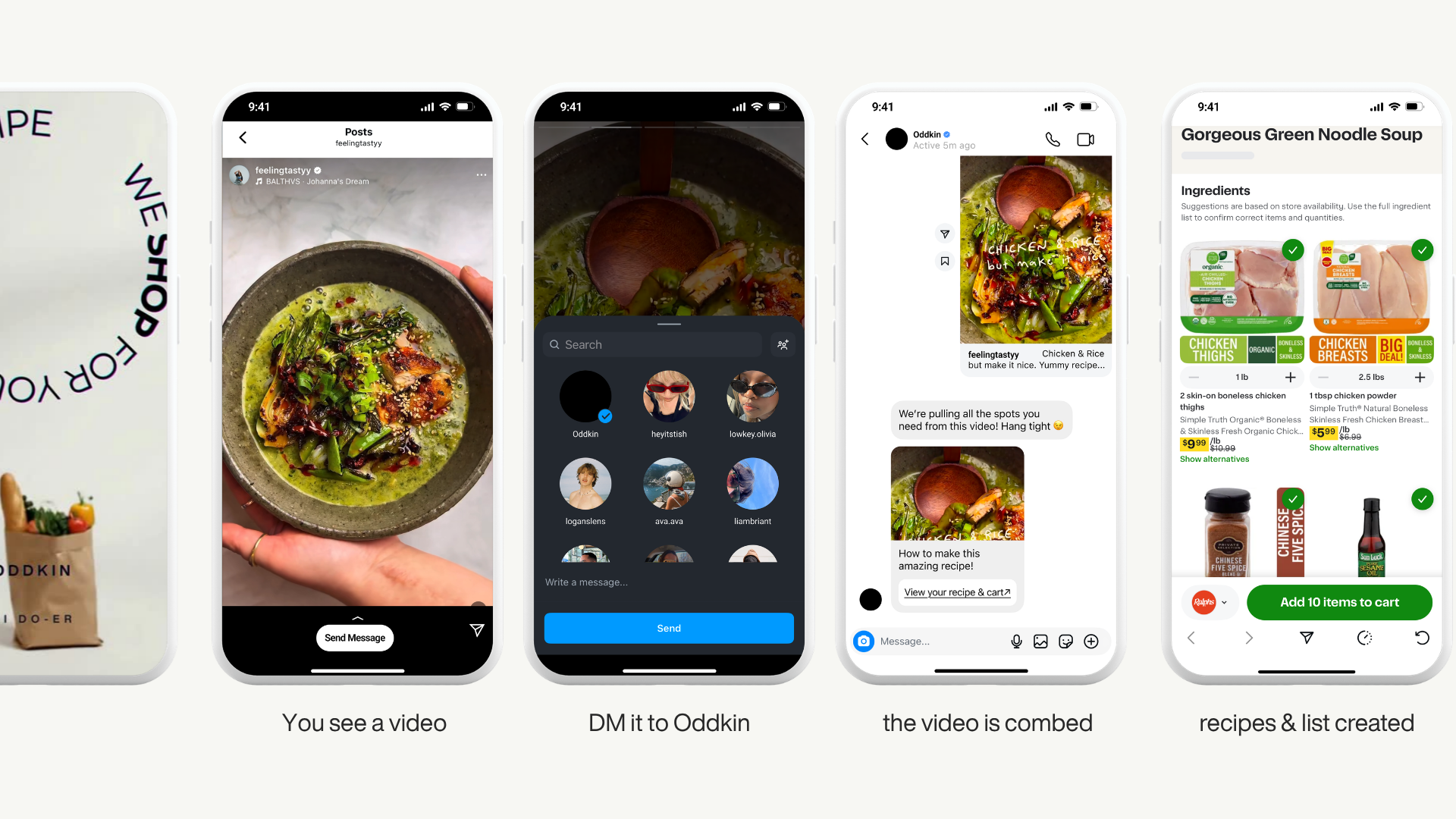
The consumer surface is deliberately boring: a DM thread. You send it a video the way you would send it to a friend. No new app, no new habit.
I don't use Instacart. Now what?
Most consumers don't use AI when they think about grocery shopping yet. And the ones who do make a lot of different choices about where to buy.
Instacart boasts 8M monthly active users — only 5% of the US consumer app population. The other 95% are spread across curbside pickup, in-person loyalty, meal-kit subscriptions and I'll just order DoorDash tonight, and most run several of those in the same week.
Even the people who do shop Instacart rarely shop it exclusively. Especially the Trader Joe's loyalists — because TJ's refused to get on the delivery bandwagon. We hate them and love them for it.
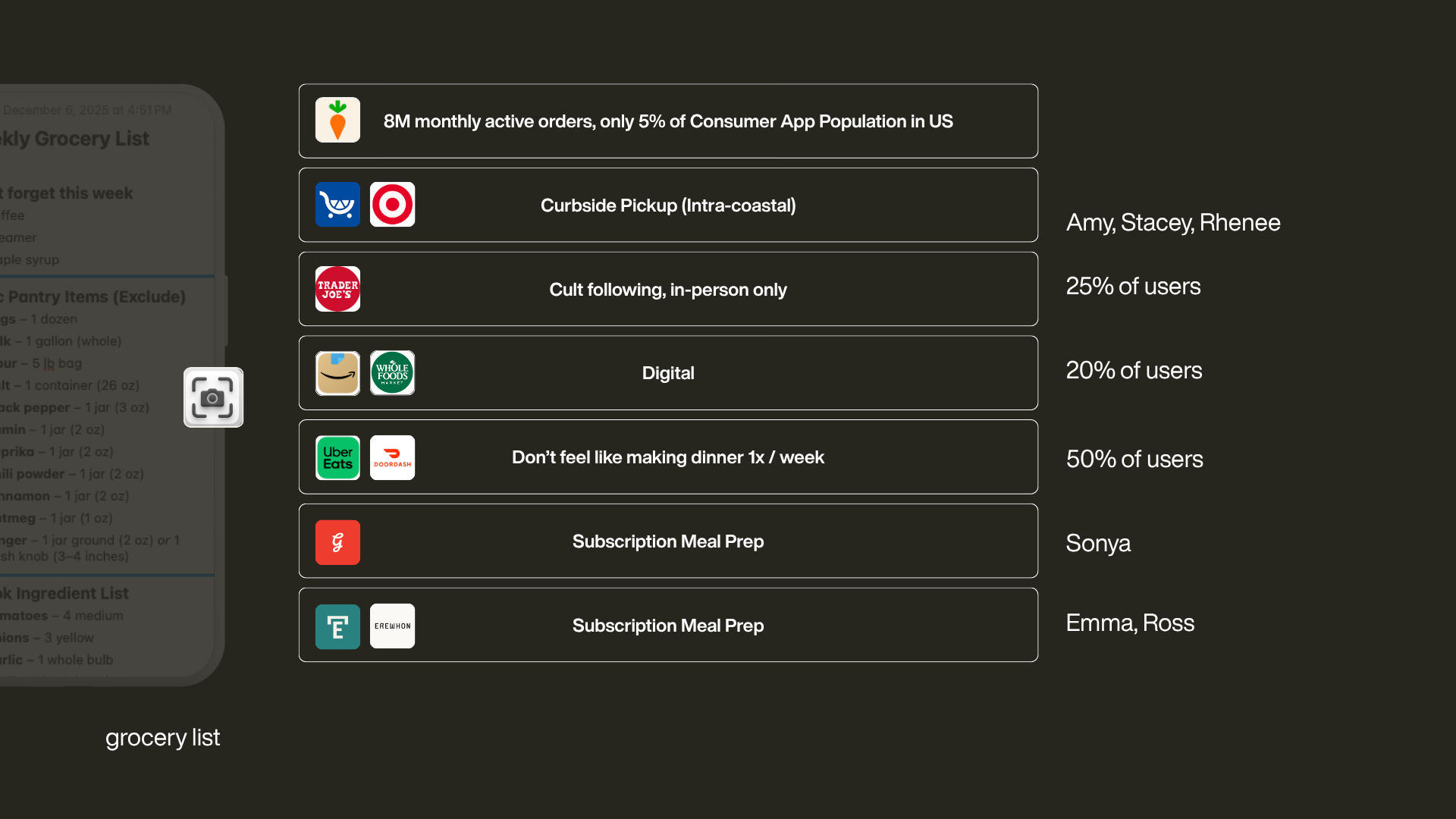
From an app's perspective those customers are unreachable. From a context layer's perspective they are completely reachable — you just can't monetize them through a delivery fee. You monetize them by being the thing that knows what they need before they walk in.
Content drives the shopping
Today most behavior is driven by the content we see on social platforms and what our friends recommend to us. Shopping behavior is downstream of content, which means this scales from one entry point — weekly groceries — into every other shopping category.
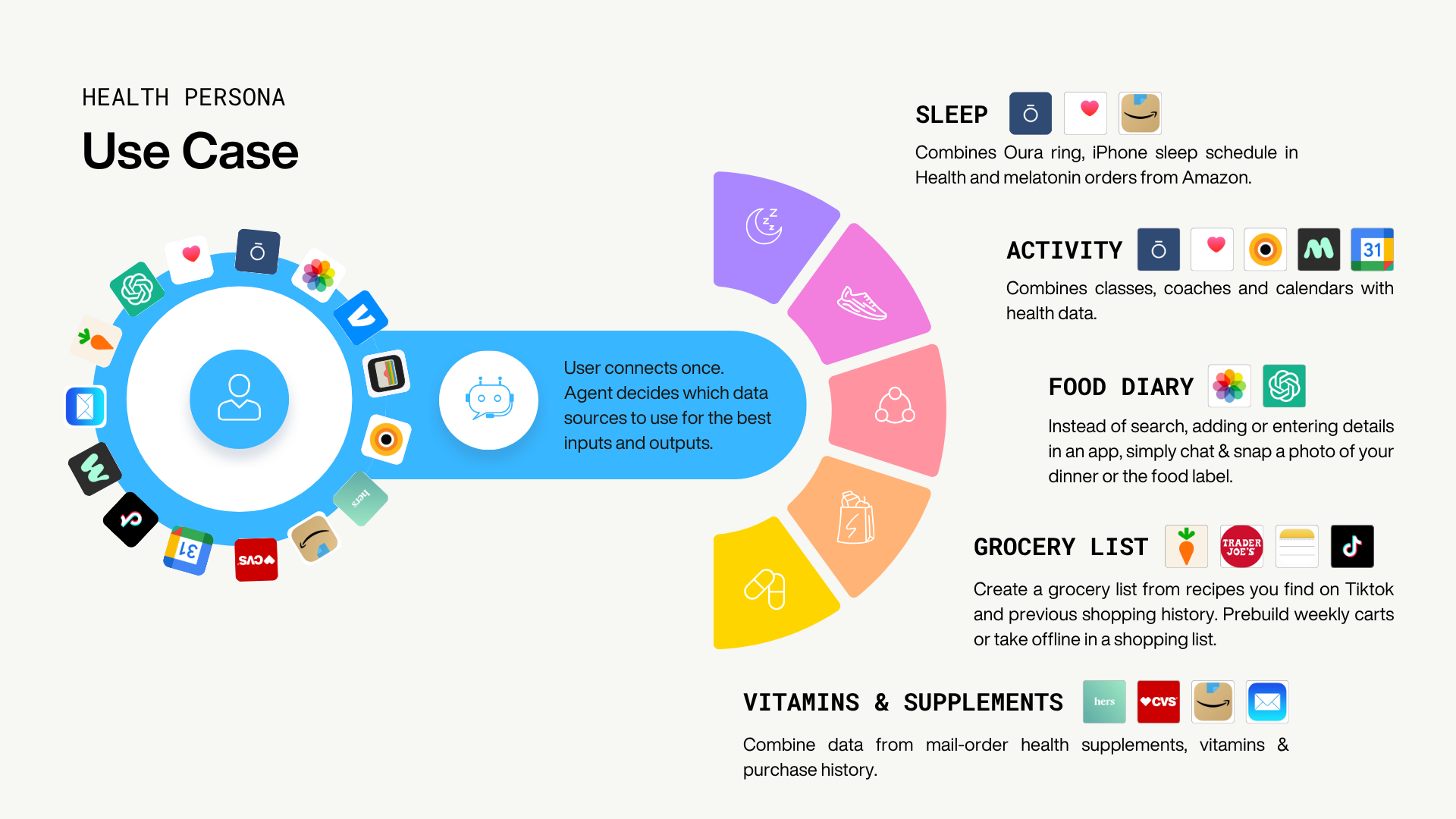
Point the same architecture at a health persona and it connects once, then decides for itself which sources to pull for sleep, activity, the food diary, the grocery list and the supplements. The agents should be adaptable as they understand new project context.
Once an agent holds the user goal, every product and shop becomes interchangeable — chosen on price, availability and speed, in that order, by software with no brand loyalty whatsoever.
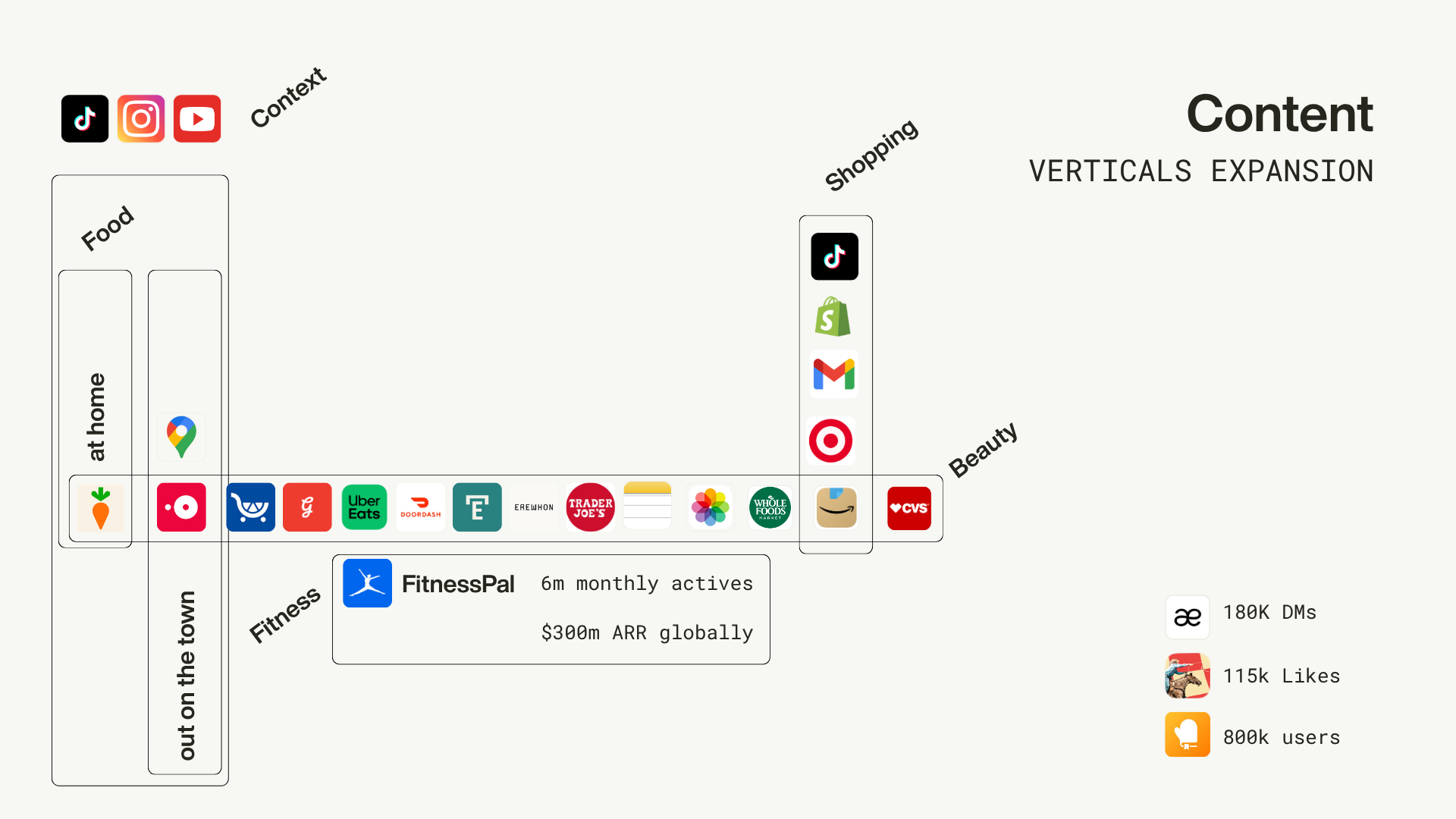
Agents could expand to own all food, beginning with grocery and meal prep and extending into date nights and city guides.
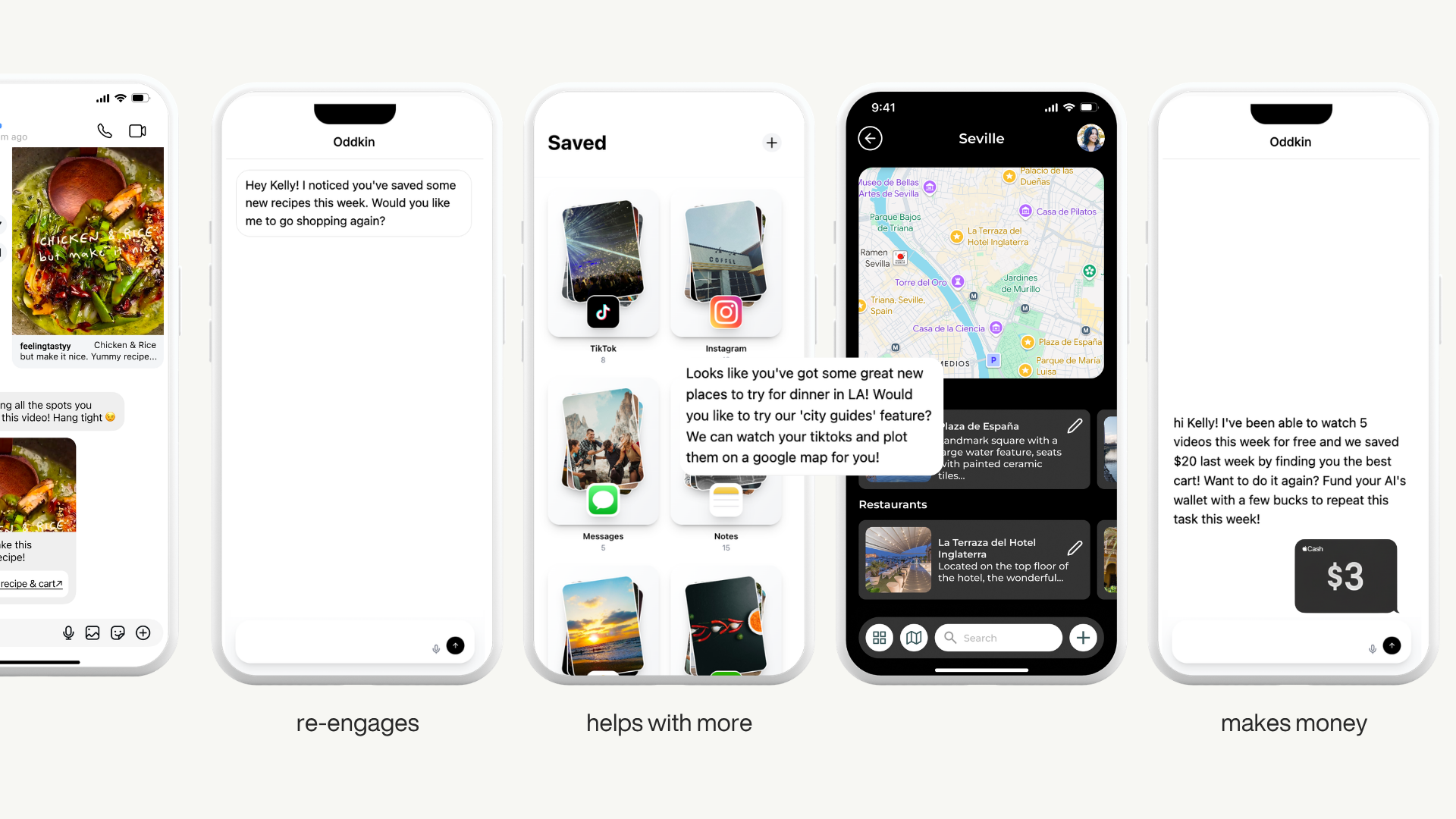
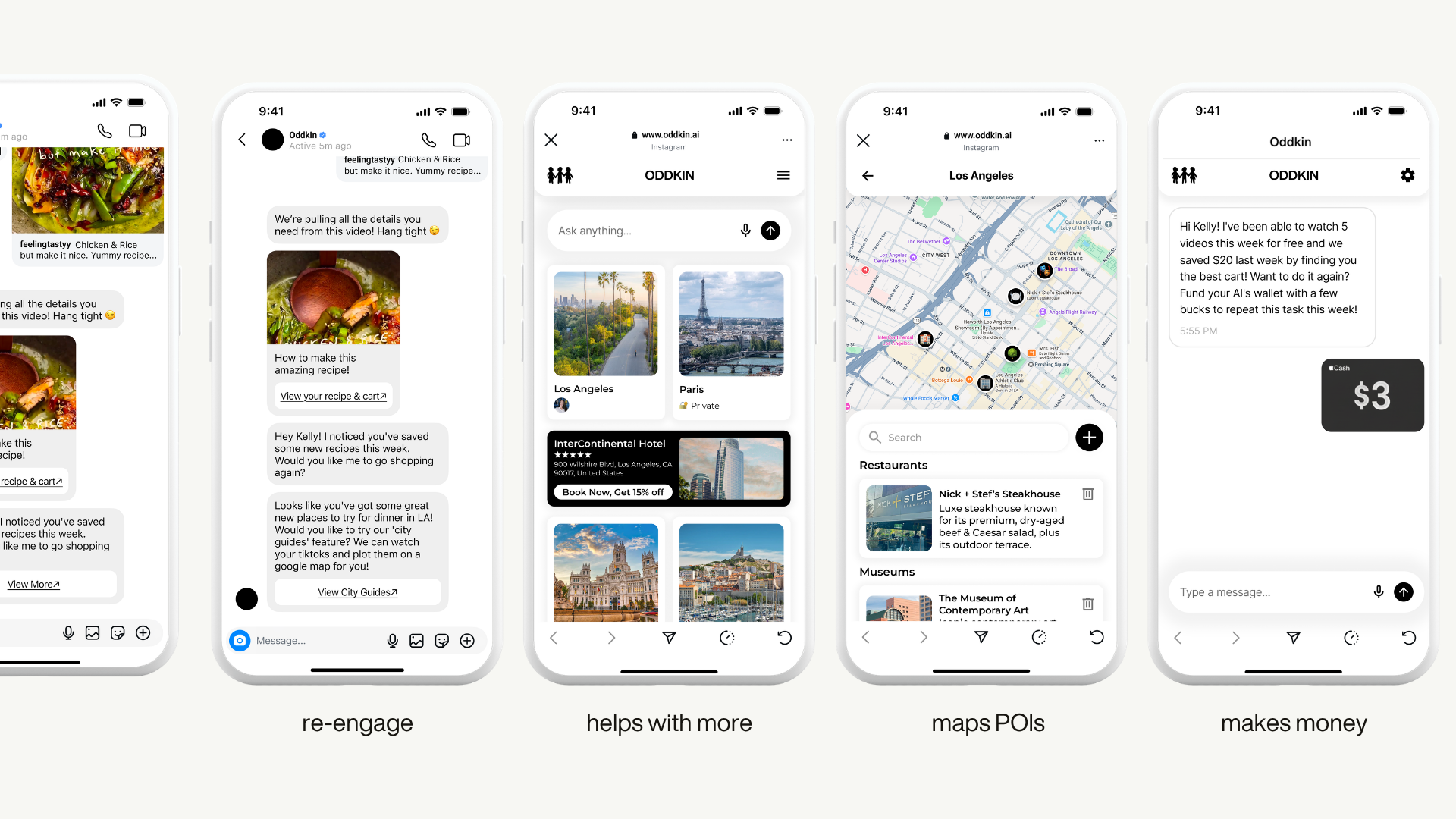
What it looks like in practice: metered watching, and a wallet the agent funds against savings it can prove. I've been able to watch 5 videos this week for free and we saved $20 last week by finding you the best cart. I would rather earn the next transaction than sell a subscription up front.
Start with Pareto
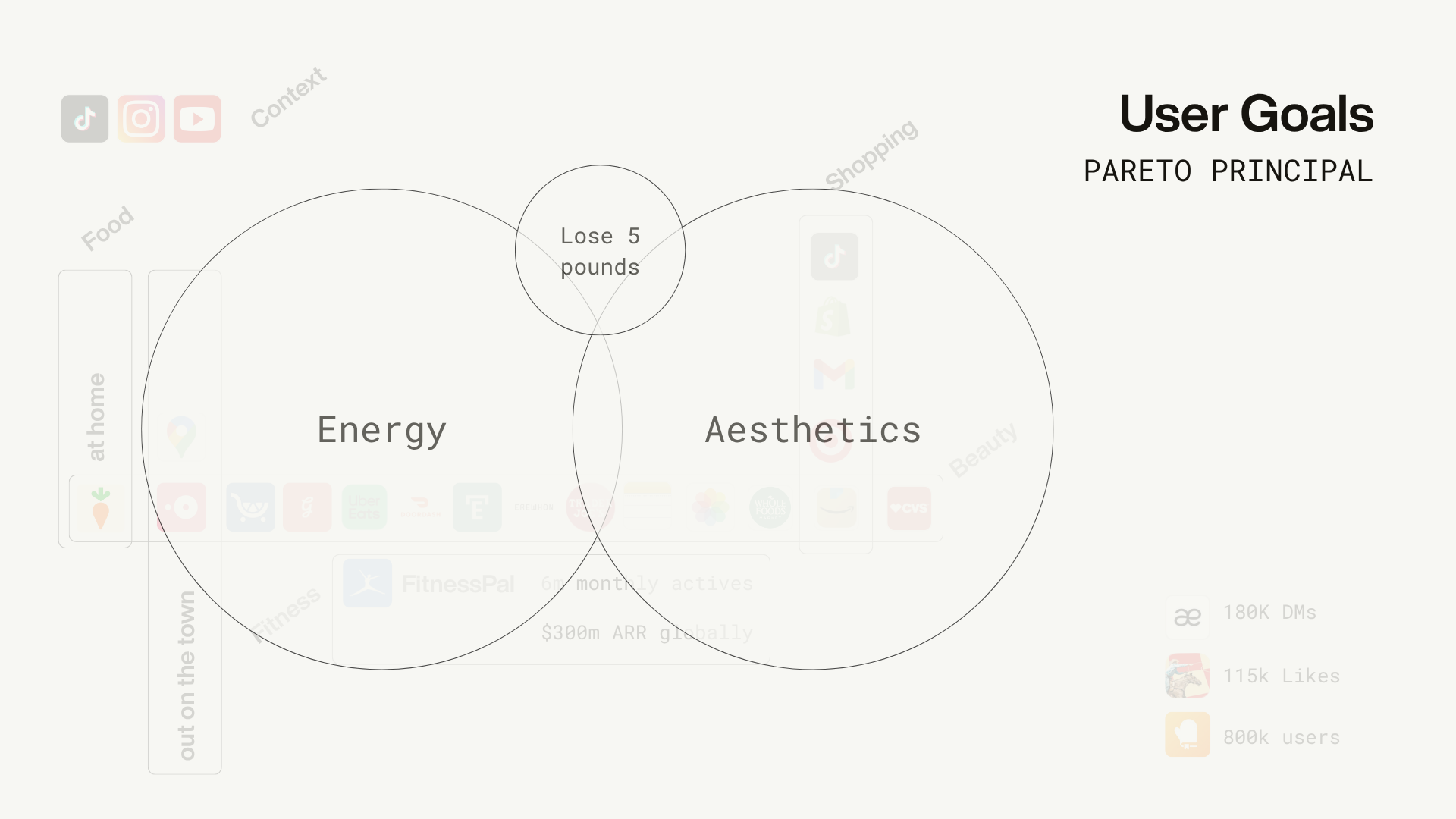
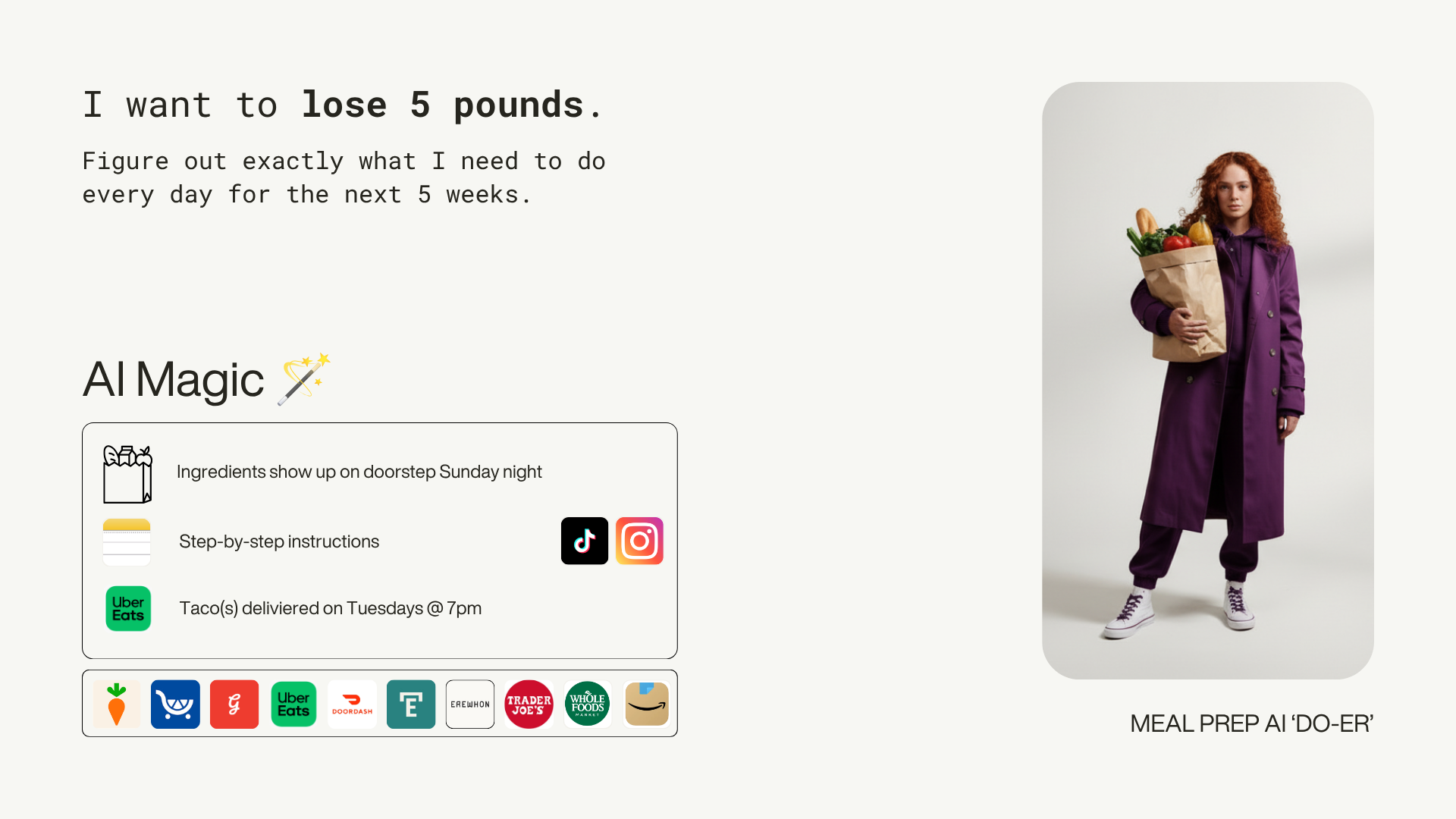
When you study this space, users tend to vibe-code personal apps around a small set of common goals — weight loss, energy, health, aesthetics. Any one of them is an entry point that expands into other shopping verticals.
Agent to agent
Looking forward, getting a person to let an agent spend their money unsupervised hasn't been solved yet.
Trust gets granted in increments. First it can look. Then it can build a cart I approve. Then it can spend fifty dollars without asking. Then it handles the returns — and once it has processed a refund for bruised avocados correctly, it has earned something no amount of advertising buys.
Which is why capabilities get equipped rather than configured: meal prep first, then pet care, fitness, personal finance, health — each one a new permission grant on the same relationship.
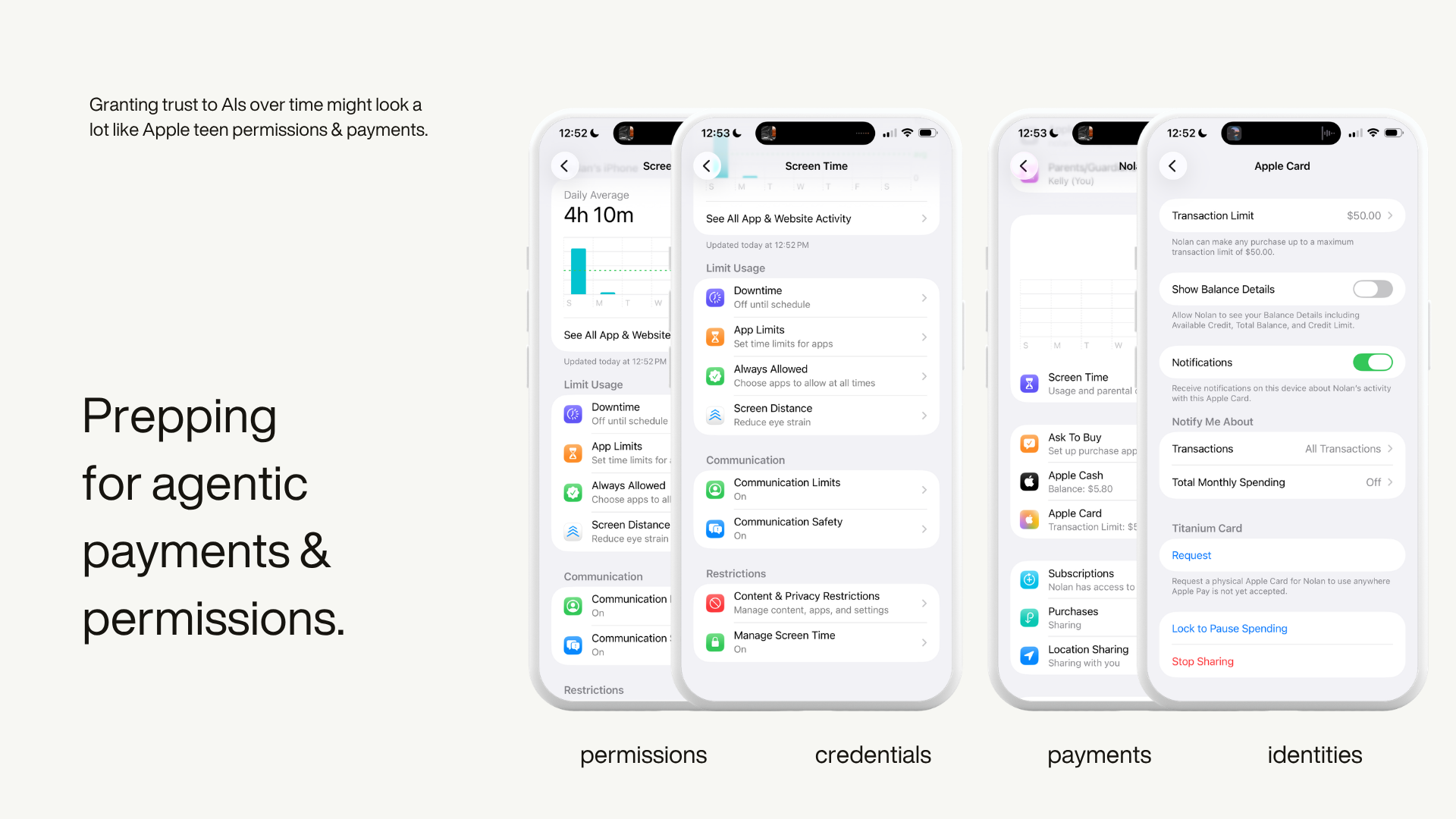
The closest working model already shipped, and is the one we use with teenagers: a transaction limit, ask-to-buy, a notification on every purchase, and the ability to pause the whole thing instantly. Permissions, credentials, payments, identities.
When your agent gets a body
My favourite version of this is the one where digital and physical AI combine. Here is what it looks like when it works.
It's a Tuesday, a few years from now. Nobody in the house has thought about dinner.
George — our robot — opens the door and looks: the cilantro is wilting on the top shelf, there are three eggs left, and the rotisserie chicken from Sunday needs to be used tonight or thrown out tomorrow. George closes the fridge and opens the pantry — the quinoa is nearly gone, one can of chickpeas left, the gluten-free pasta down to a half-box. Then the spice rack: cumin's full, the smoked paprika is almost empty, and there's no fennel, because there's never any fennel. George knows nobody in this house will touch it.
George isn't guessing. Before he arrived, these preferences were loaded with this household — who lives here, how they eat, what they avoid and why. The sixteen-year-old is gluten-free, non-negotiable. Mom has been on a protein kick for two months, so George has been quietly tilting the week's meals toward it. Dad won't say it out loud, but he leaves anything with fennel on the plate, so George stopped buying it. The little one will only eat food that isn't touching on his plate.
George accesses the Instacart history. He sees the rhythm: chicken thighs every Sunday, the Greek yogurt that's been doubling since the protein kick started, the gluten-free bread that gets bought weekly and finished by Thursday. Then he checks Mom's recently bookmarked recipes on TikTok. He builds the cart — noticing the quinoa is on sale and the chickpeas aren't, swaps accordingly — and places the order in the time it took to read this paragraph.
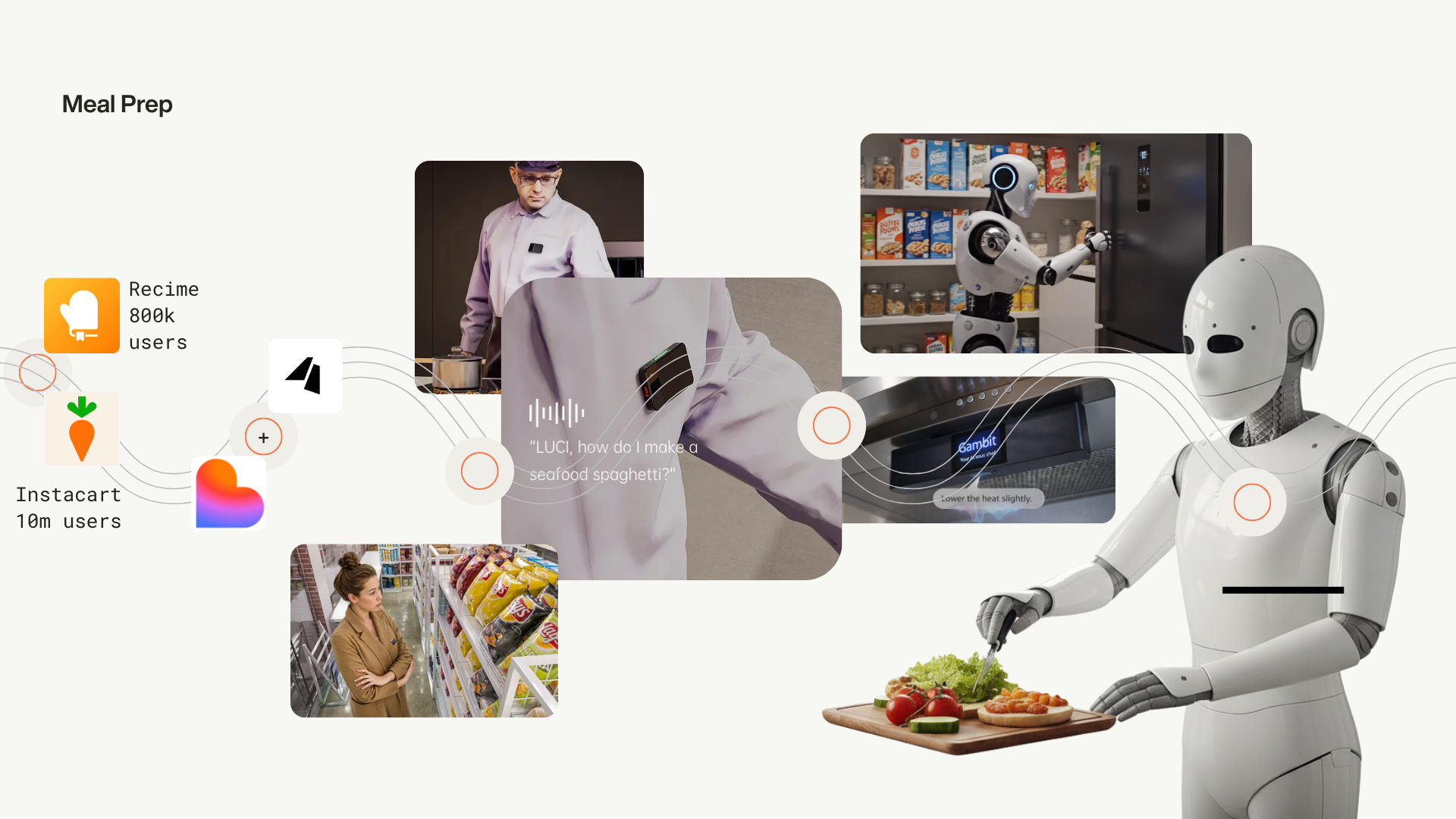
When the delivery lands on the porch, George brings it in and puts it away — cold things first, rotating the older yogurt to the front so it gets used, logging the new expiration dates as it goes.
Then George preps for the week using a coBot™ vegetable chopper and meat slicer. Assembling high-protein meals in glass containers. Spatchcocking Sunday's chicken. Assembling tomorrow's lunches and setting aside what he'll need in the morning.
Nobody opened an app, built a list, or trained the robot on their family for three months. George simply knew — because the knowing was loaded in before it ever crossed the threshold.
That is the entire thesis, in one kitchen. The smart fridge is obsolete. Robot George is a member of the household. The difference between them isn't dexterity or vision — it's that George arrived already knowing this family. That layer, the portable understanding of how you live, is what no robot ships with today. And it is exactly what I keep building toward: mobile consciousness, the thing that turns a $30,000 machine into yours the moment it walks in the door.