project_Oddkin
Most AIs help you think. Oddkin helps you do — a concept for agents that finish personal-life tasks end to end, and the market case for why the cold start problem just evaporated.
The AI do-er
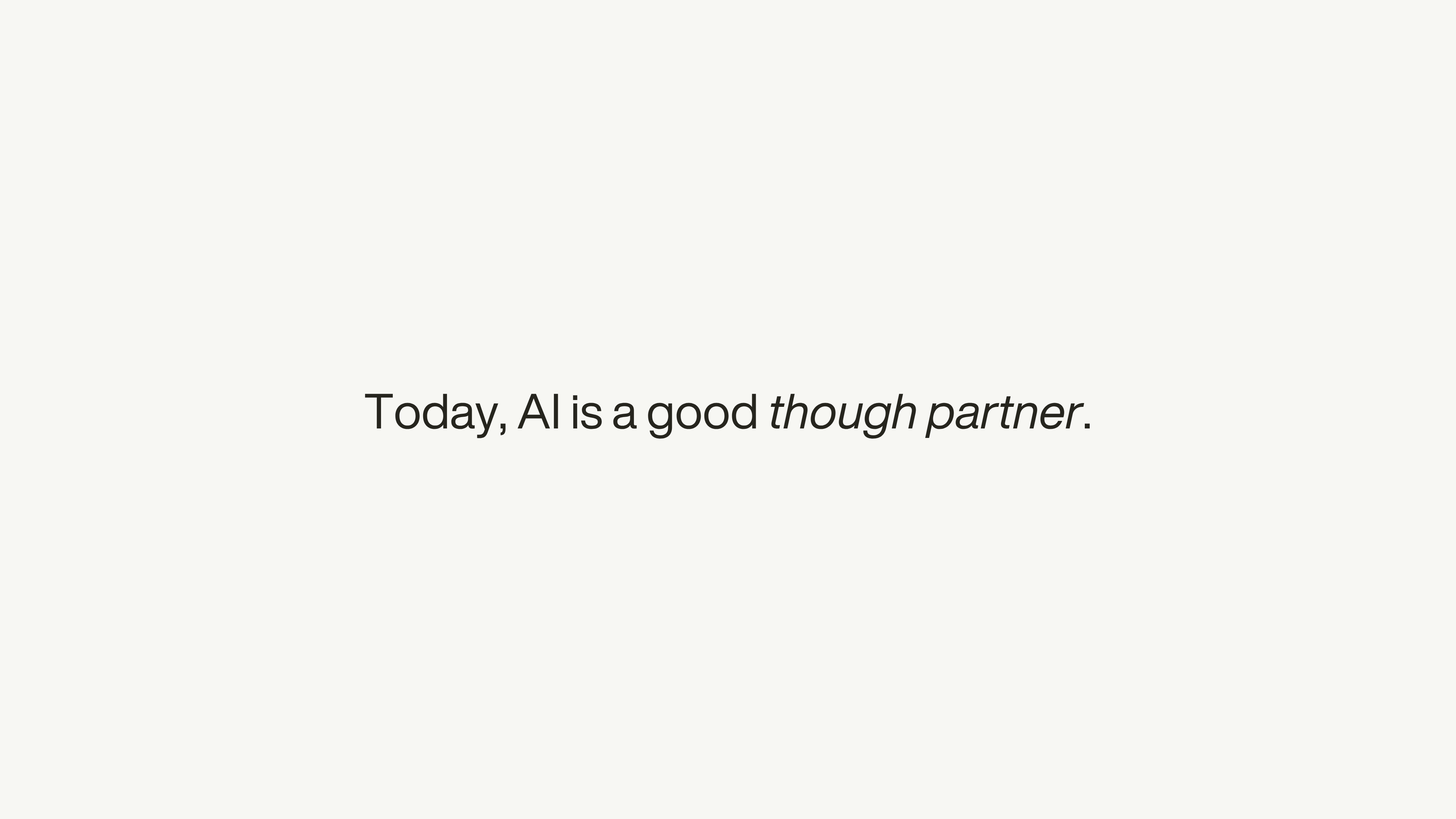
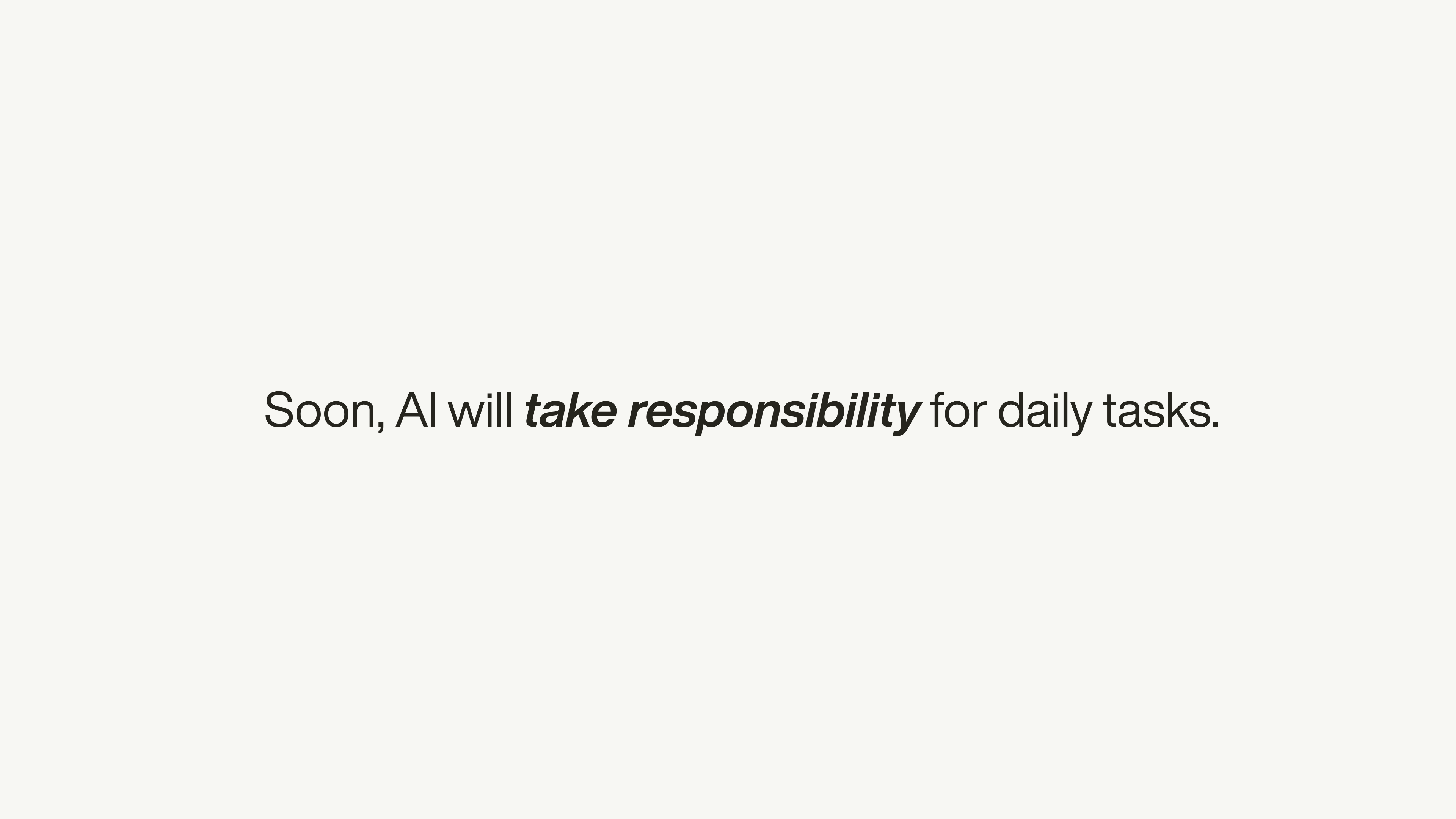
Most AIs help you think. Oddkin helps you do. These AI do-ers will power the next wave of the convenience economy — replacing gigs and tasks with automation that is faster, cheaper and more private, without humans in the loop. Delegate what you hate. Do what you love.
The vision, compressed: yesterday humans, today AI, tomorrow robots.
What tasks do people actually hate?
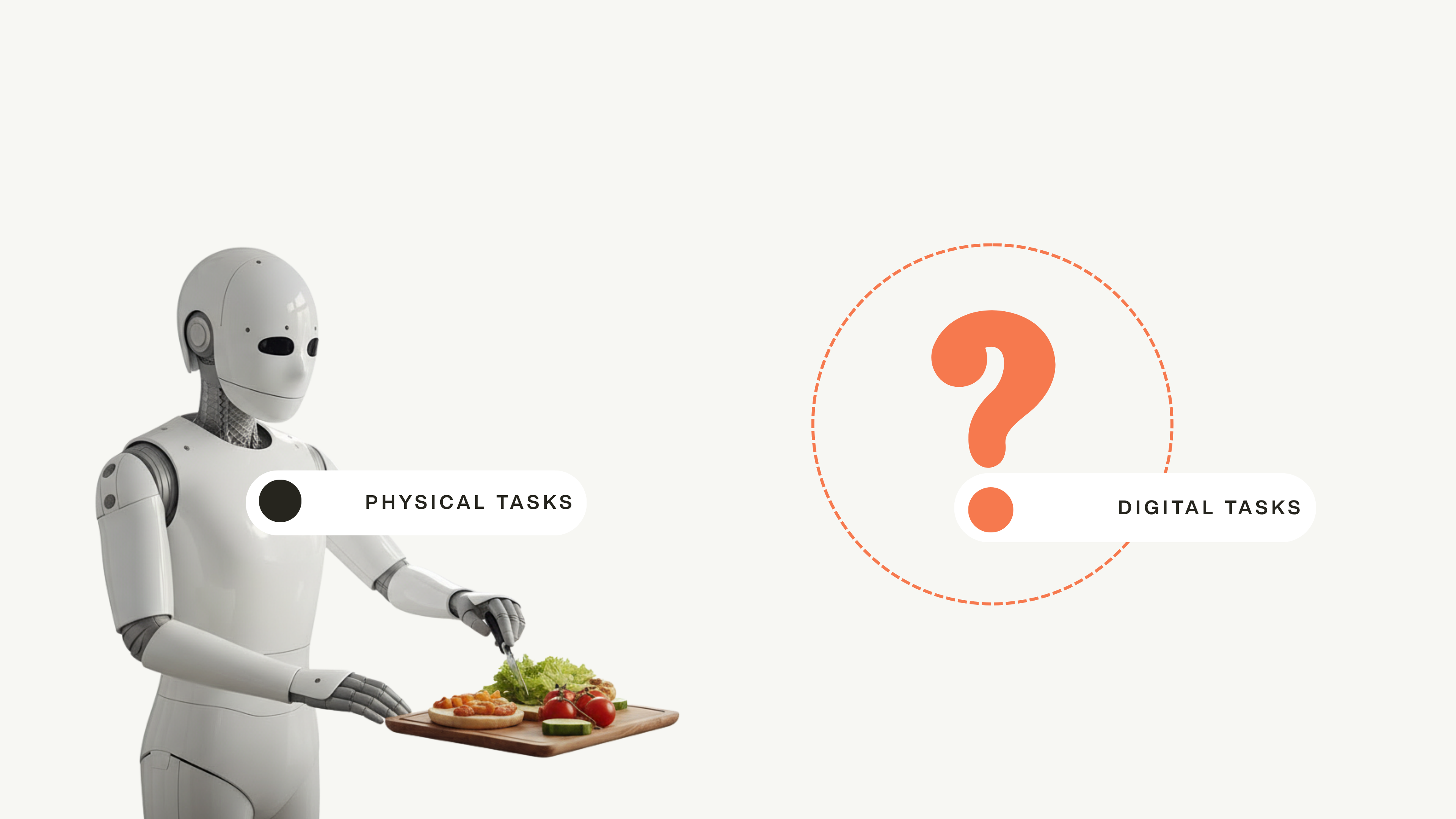
Robotics has a clear, well-funded answer for the physical chores -- starting in the kitchen and the laundry room. Digital personal tasks are unclaimed by a corporation, but emerging as individual, bespoke vibe coded projects.
A thousand respondents ranked household tasks which I've plotted on two axes: how long it takes each week, and how much you hate doing it. There is an interesting relationship between 'time spent' and 'identity'. If someone associates a task with their personal brand or a hobby, they don't mind spending time on it.
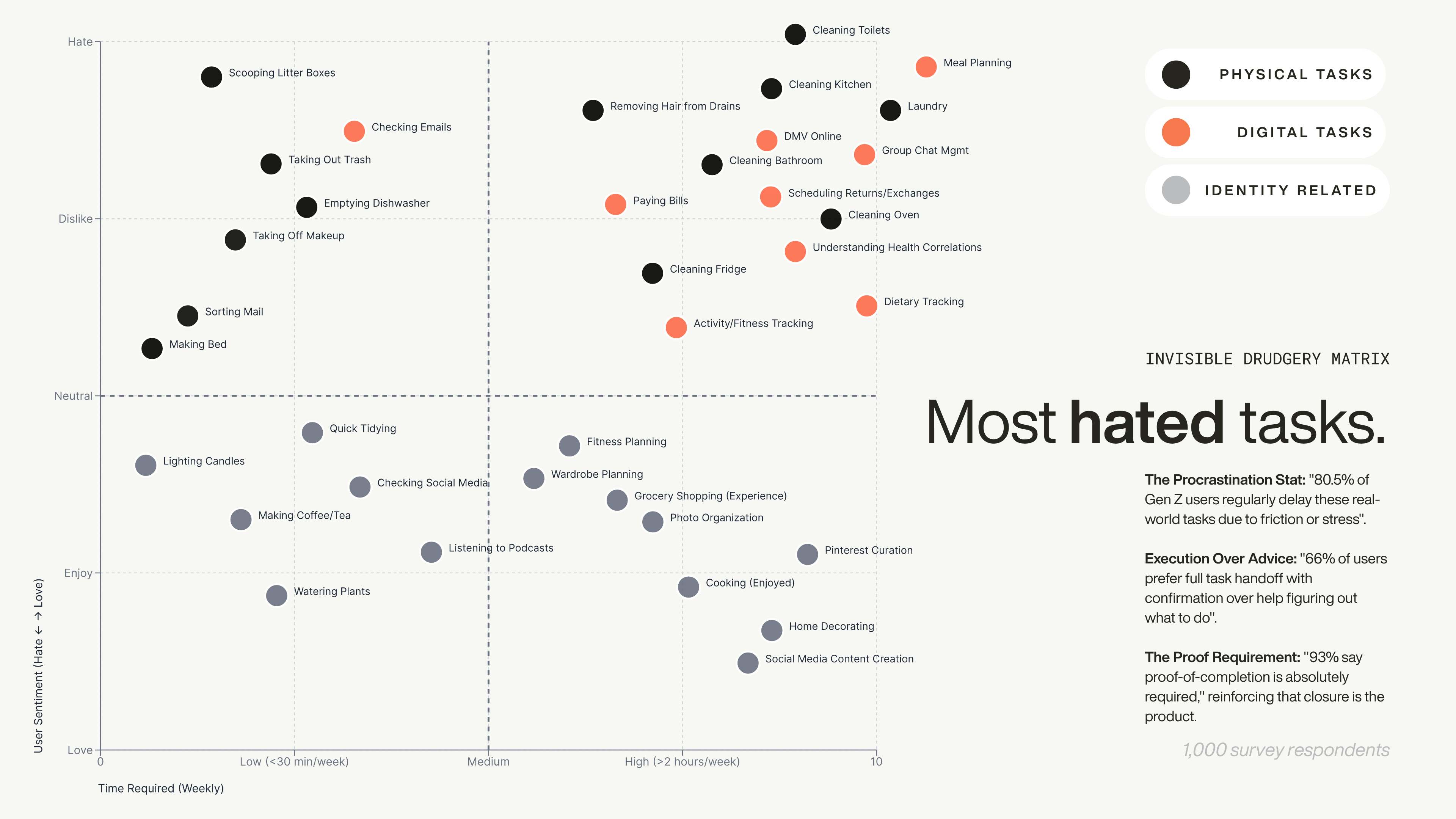
Cleaning toilets and meal planning sit at the same altitude of loathing. Three numbers from that survey are the ones I keep coming back to: 80.5% of Gen Z regularly delay these tasks because of friction or stress; 66% prefer full task handoff with confirmation over help figuring out what to do; and 93% say proof-of-completion is absolutely required.
Doing AIs have a last mile problem
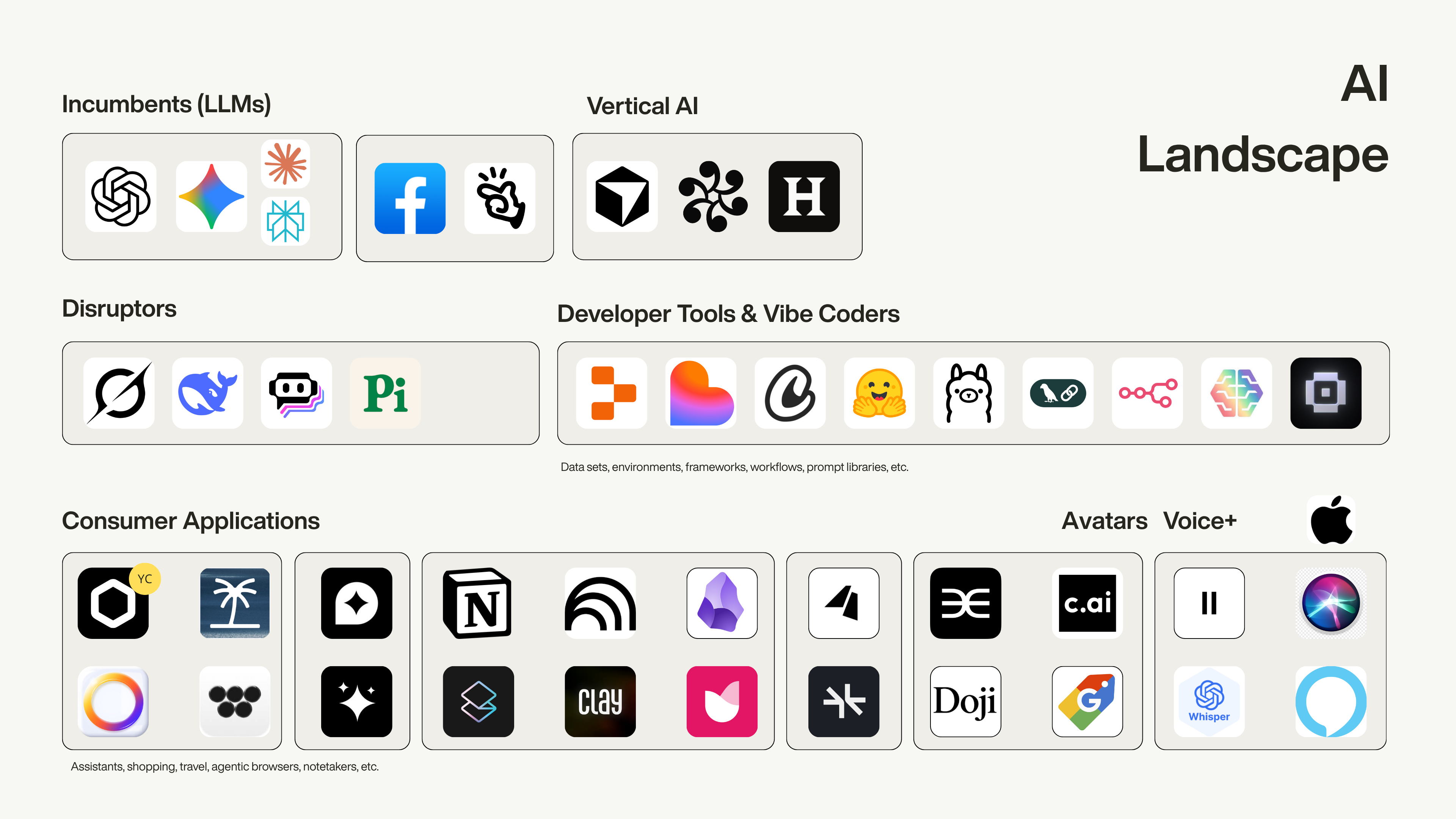
The market is saturated with thinking and making AIs.
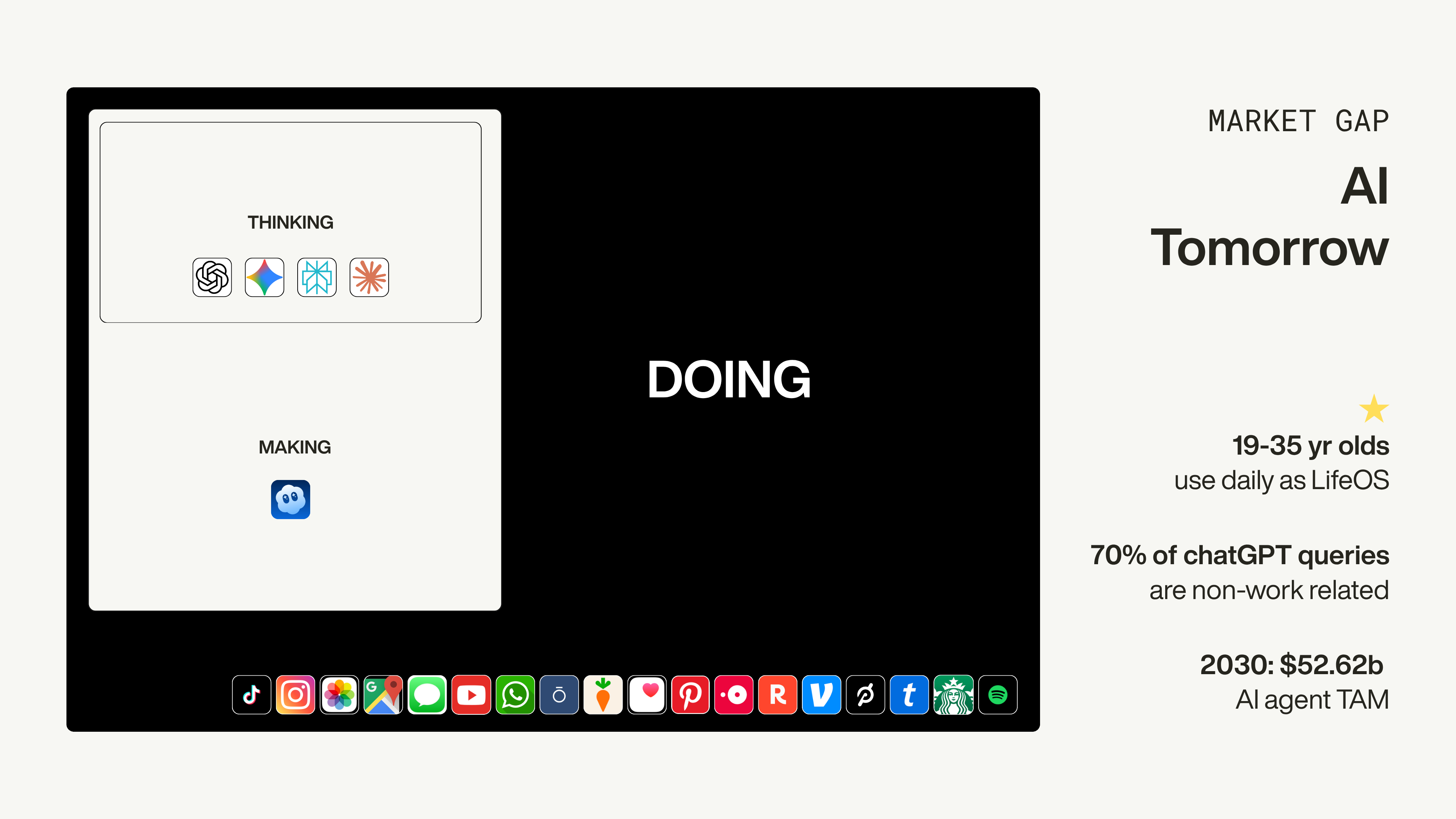
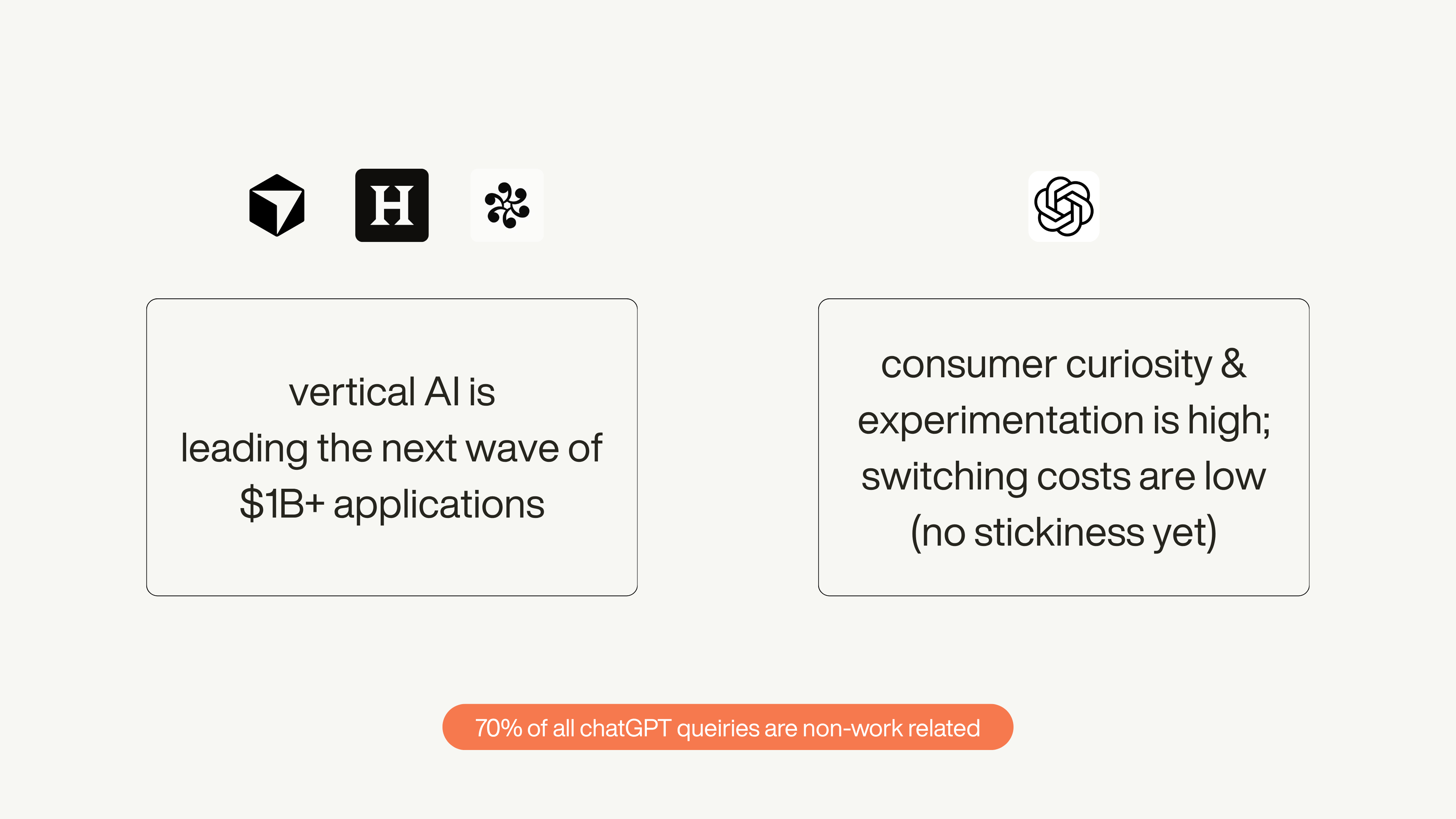
The demand is already there and pointed at the wrong surface: 70% of ChatGPT queries are non-work related, 19-to-35-year-olds are using a chat window as a life operating system, and the AI agent TAM lands at $52.62b by 2030. People are asking a thinking tool to run their lives because there is nothing else to ask.
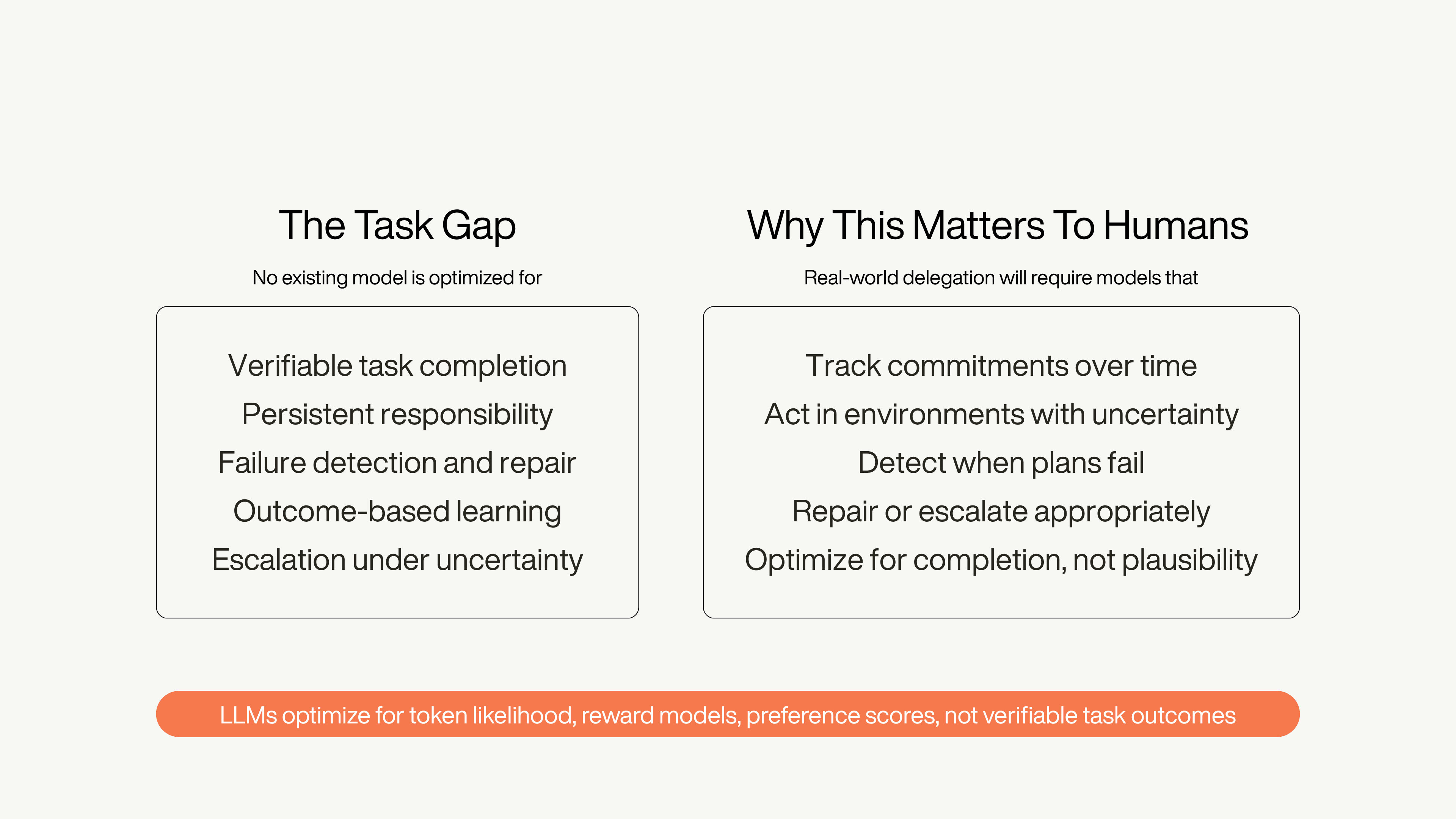
For personal life, no existing model is optimized for verifiable task completion — or persistent responsibility, failure detection and repair, outcome-based learning, or escalation under uncertainty. LLMs optimize for token likelihood, reward models and preference scores. Real-world delegation needs a model that tracks a commitment over time, notices when the plan breaks, and repairs or escalates. Optimize for completion, not plausibility.
What a do-er looks like
So I designed some concepts. You upload a selfie, and the first set of real-world do-ers loads against it — meal prep, pet care, health, travel, shopping, and a custom slot.
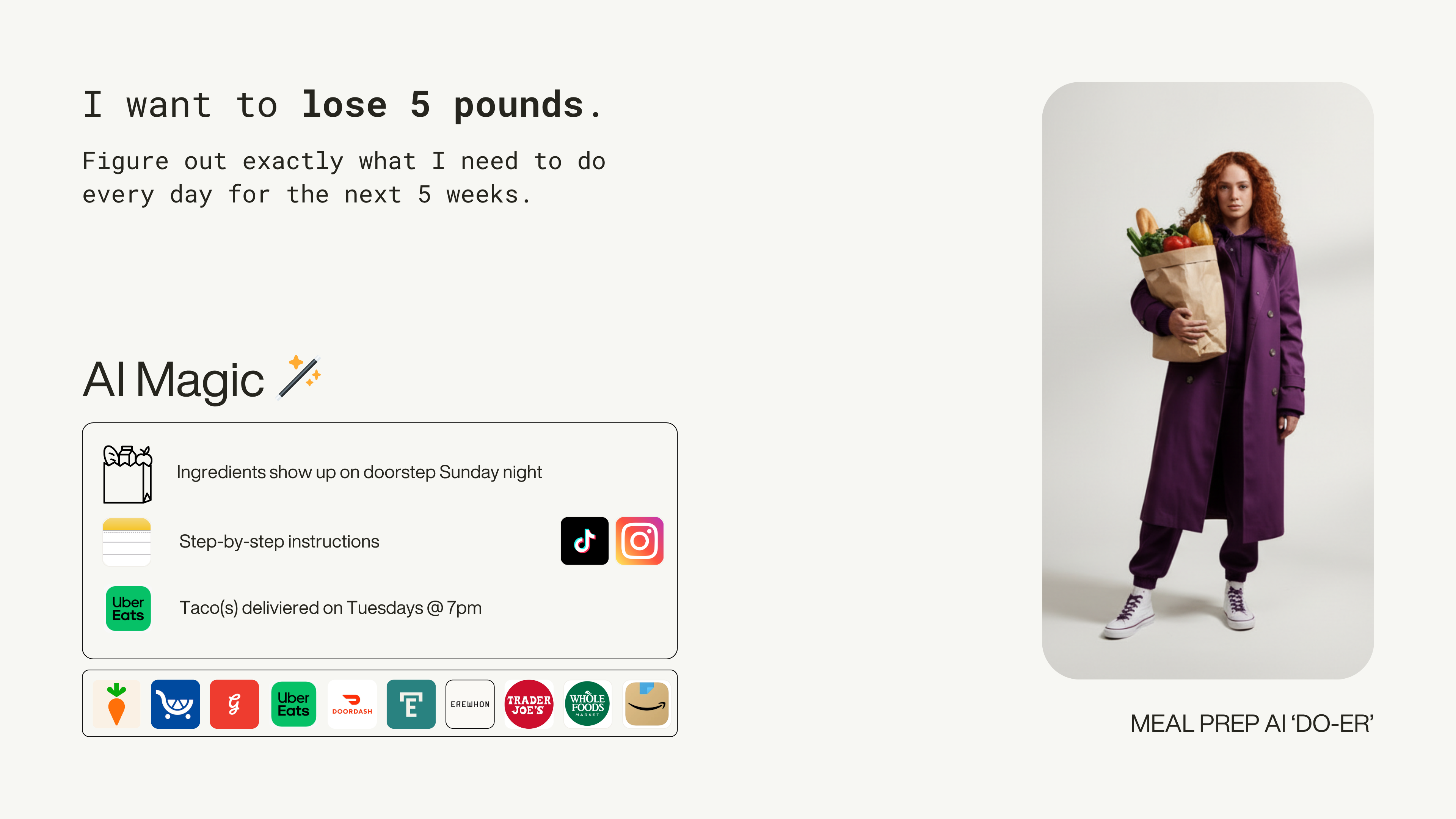
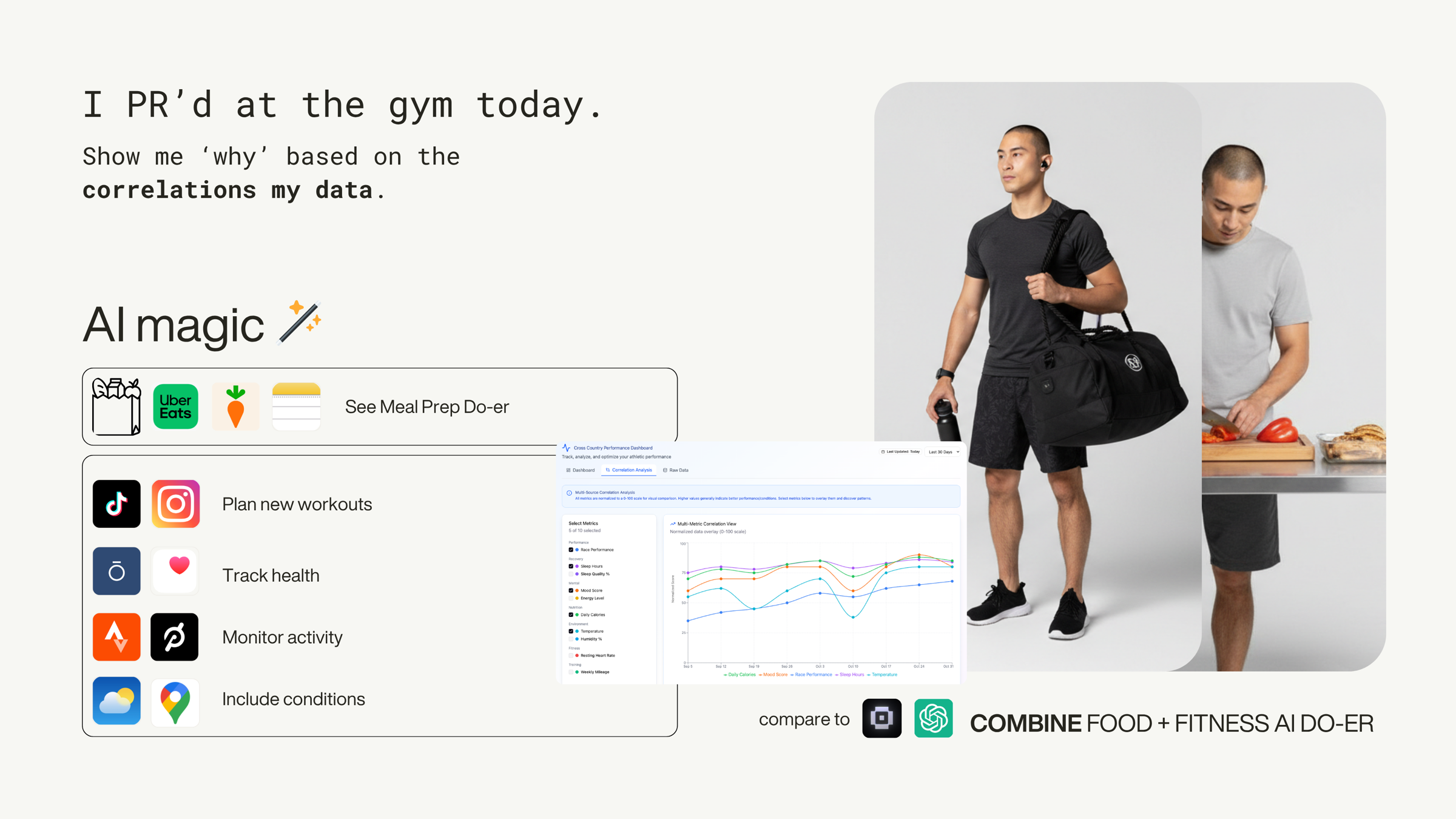
Then you hand one a task in plain language and walk away. Watch my last two weeks of TikToks and create a new meal plan for this week. The steps check off one at a time — watch the videos, take step-by-step notes, build the grocery list, modify for dietary restrictions, check the pantry — while you are at work.
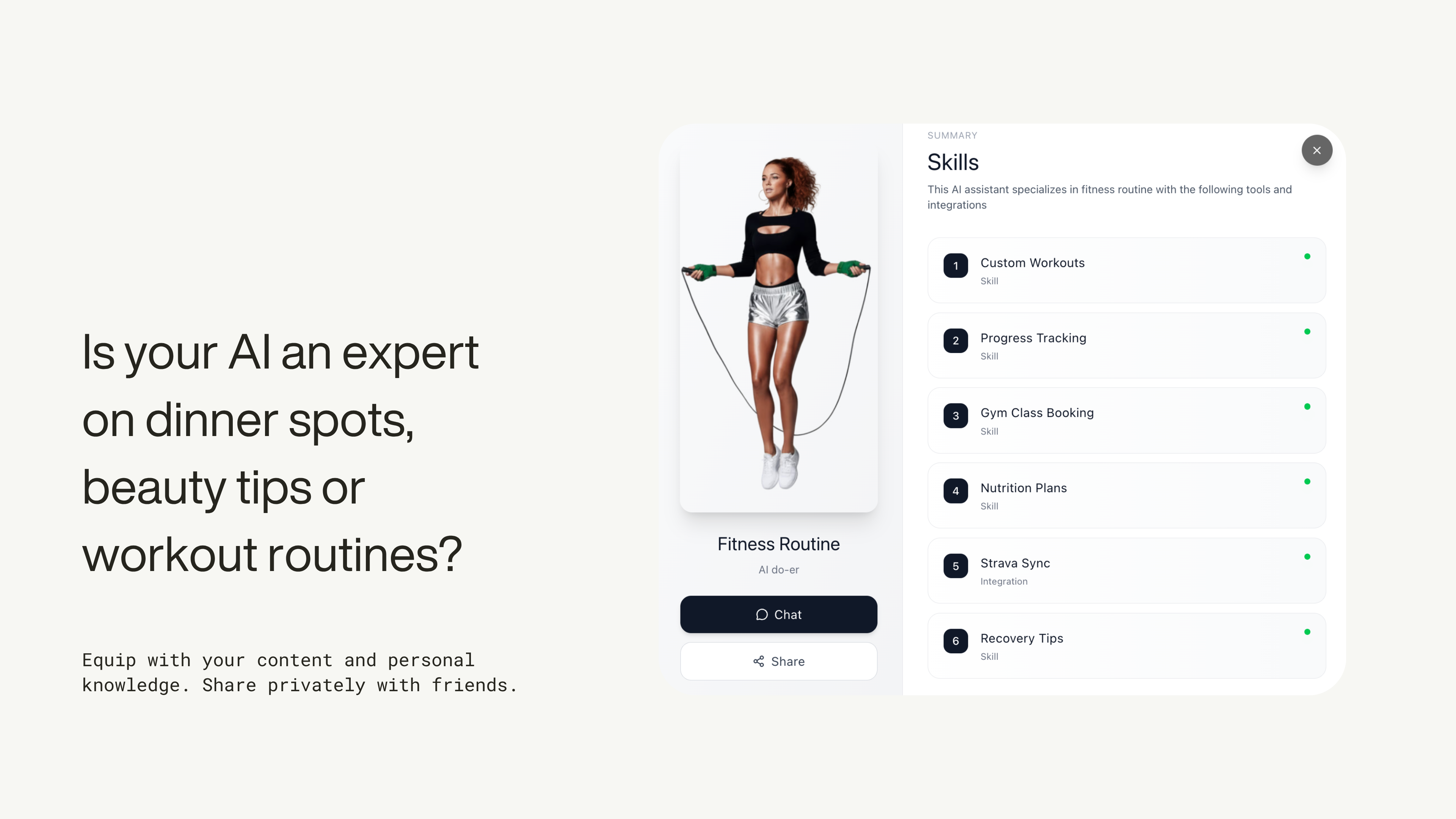
Capabilities are equipped, not configured. Meal prep first, then pet care, fitness, personal finance, health — each one a new permission grant on the same relationship, with payments, memory, phone, email, personas and identities tiered essential, enhanced and expert.
The point of a skill list is that it is legible. You can see what your fitness do-er is allowed to touch — custom workouts, progress tracking, gym class booking, nutrition plans, a Strava integration, recovery tips — and you can hand it to a friend the way you would hand over a playlist.
Why now
Vertical AI is taking the next wave of billion-dollar applications, and consumer switching costs are still at zero. Curiosity is high, stickiness has not formed, and nobody has won a habit yet.
The obvious objection is that AI assistants have been tried and have not worked. Fair. But look at what was actually on offer: consumer AI assistants that underwhelm, human-in-the-loop concierge services that are too expensive for the average Jill or Joe.
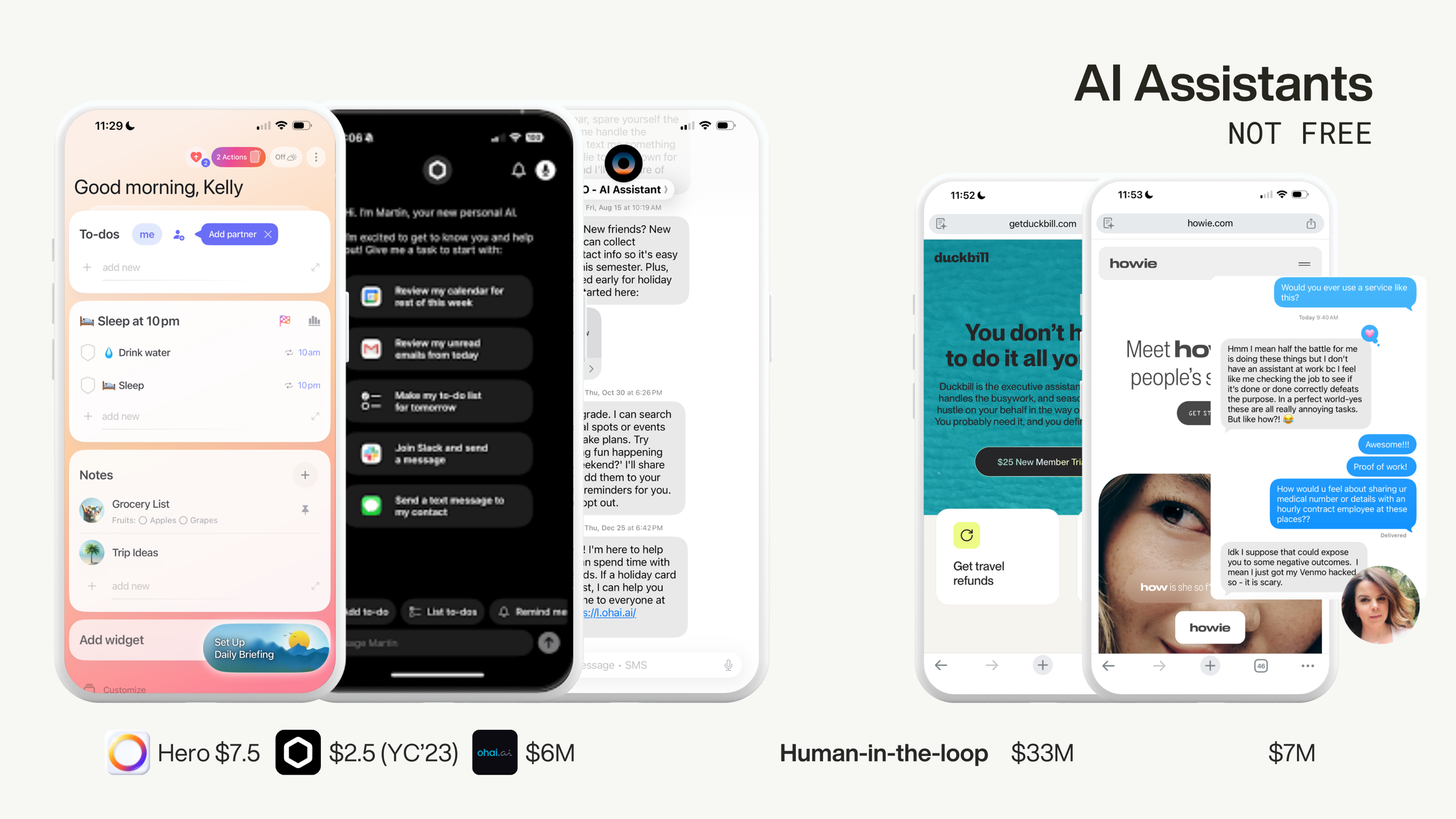
The user objections in that thread are the honest ones, and they are not about capability. Half the battle for me is doing these things, but me checking the job to see if it is done correctly defeats the purpose. Then: how would you feel about sharing your medical details with an hourly contract employee? Proof of work, and privacy. A human in the loop fails both.
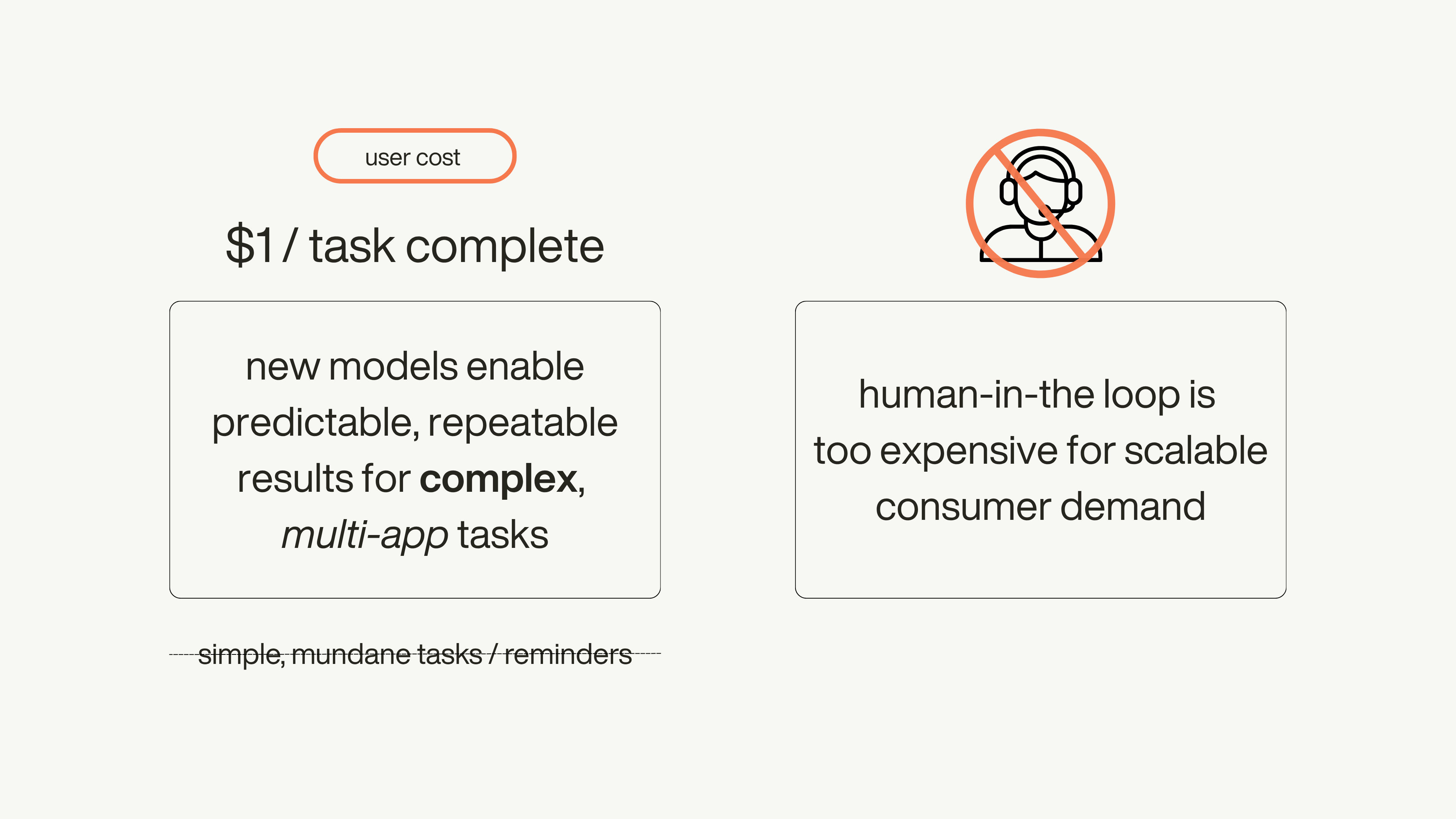
What changed is the unit economics. New models produce predictable, repeatable results on complex multi-app tasks at roughly a dollar per completed task — not simple reminders, actual multi-step work. Human-in-the-loop was never going to reach scalable consumer demand at that price.

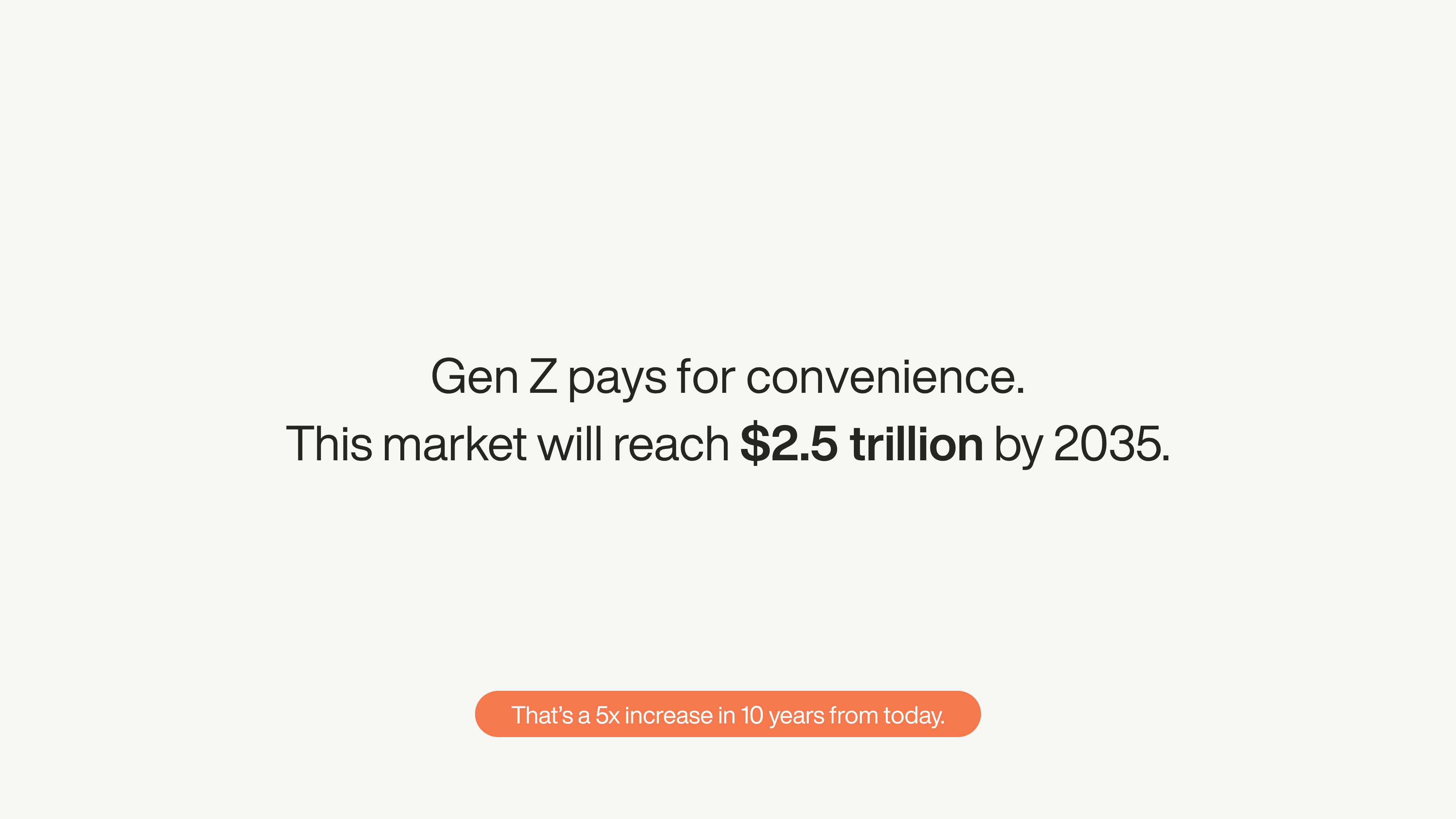
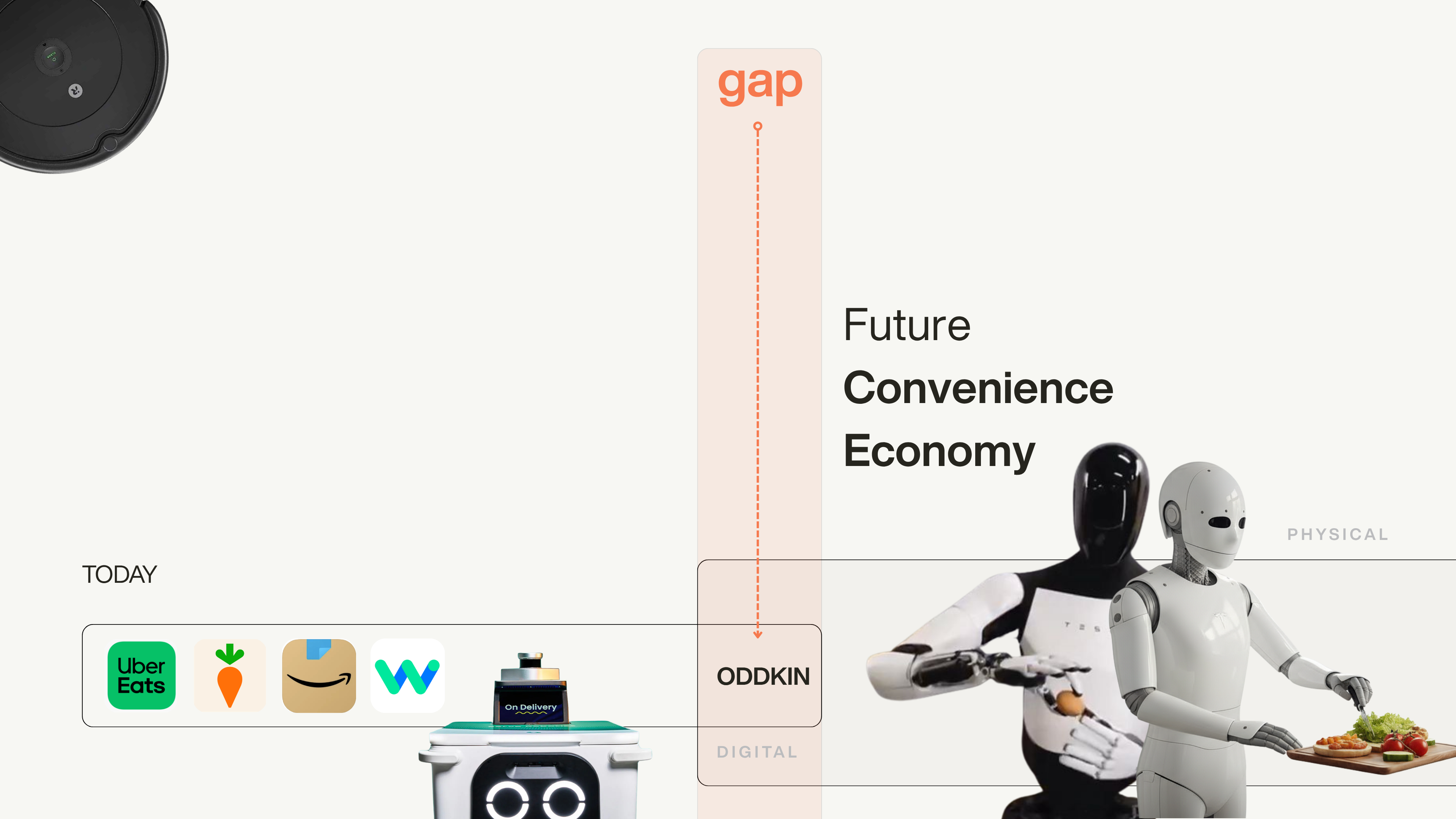
And the market it lands in is the one Gen Z already pays into: convenience, reaching $2.5 trillion by 2035, a 5x increase in ten years. Today that spend goes to delivery apps. Tomorrow it goes to humanoids. Oddkin, as an idea, is the layer in between, and the gap is real on both sides — the apps cannot act across your life, and the robots do not know your household.
VIBE CODING ERA
The Cold Start Problem
Here is the part that reorganized my thinking. The cold start problem that used to protect a consumer app — how to gather enough data from the user to create a more personalized exprience on Day 1 — may have quietly evaporated.
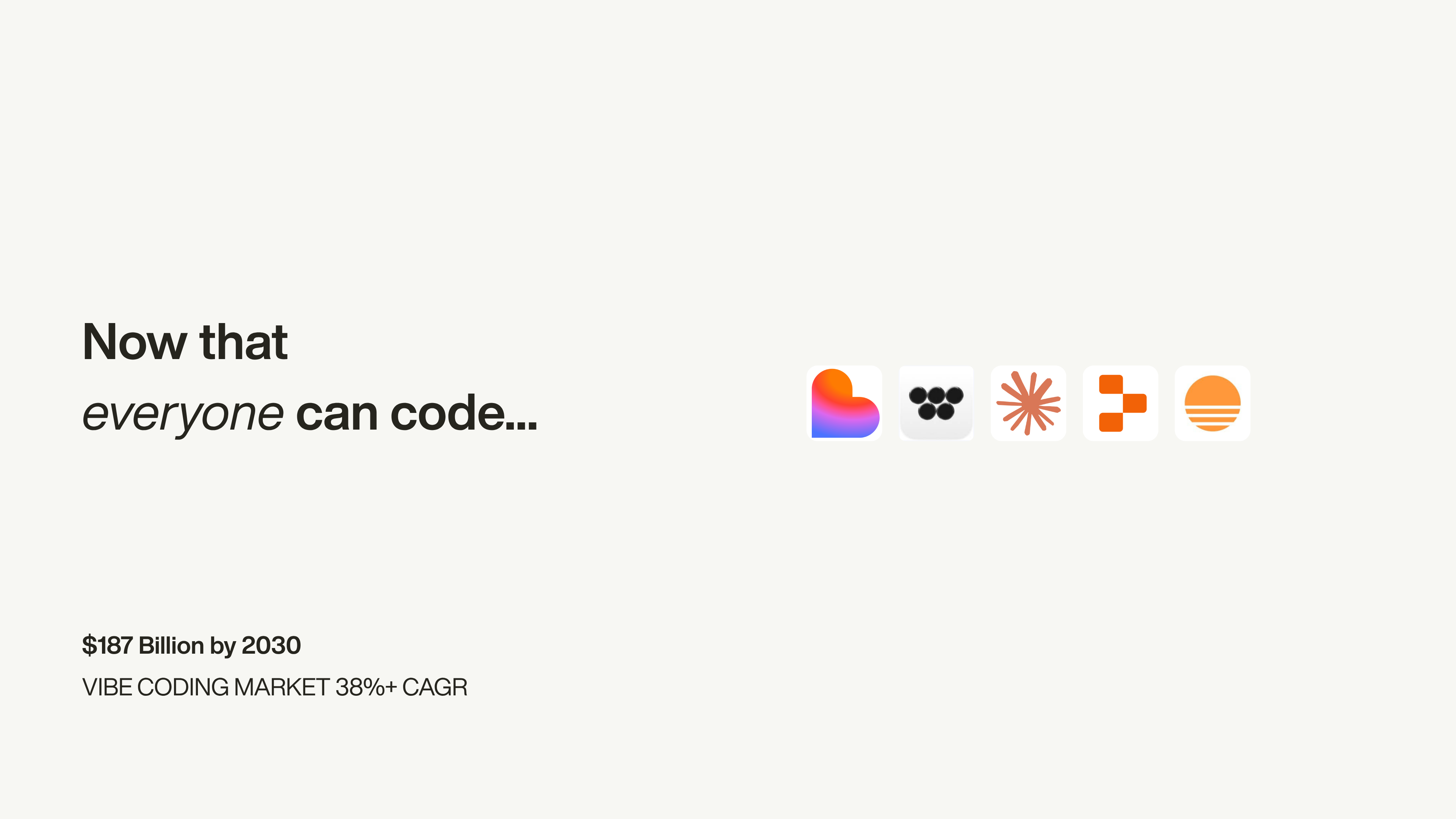
The vibe coding market is on its way to $187 billion by 2030 at 38%+ CAGR. Building the app is no longer the moat, because building the app is now a weekend.
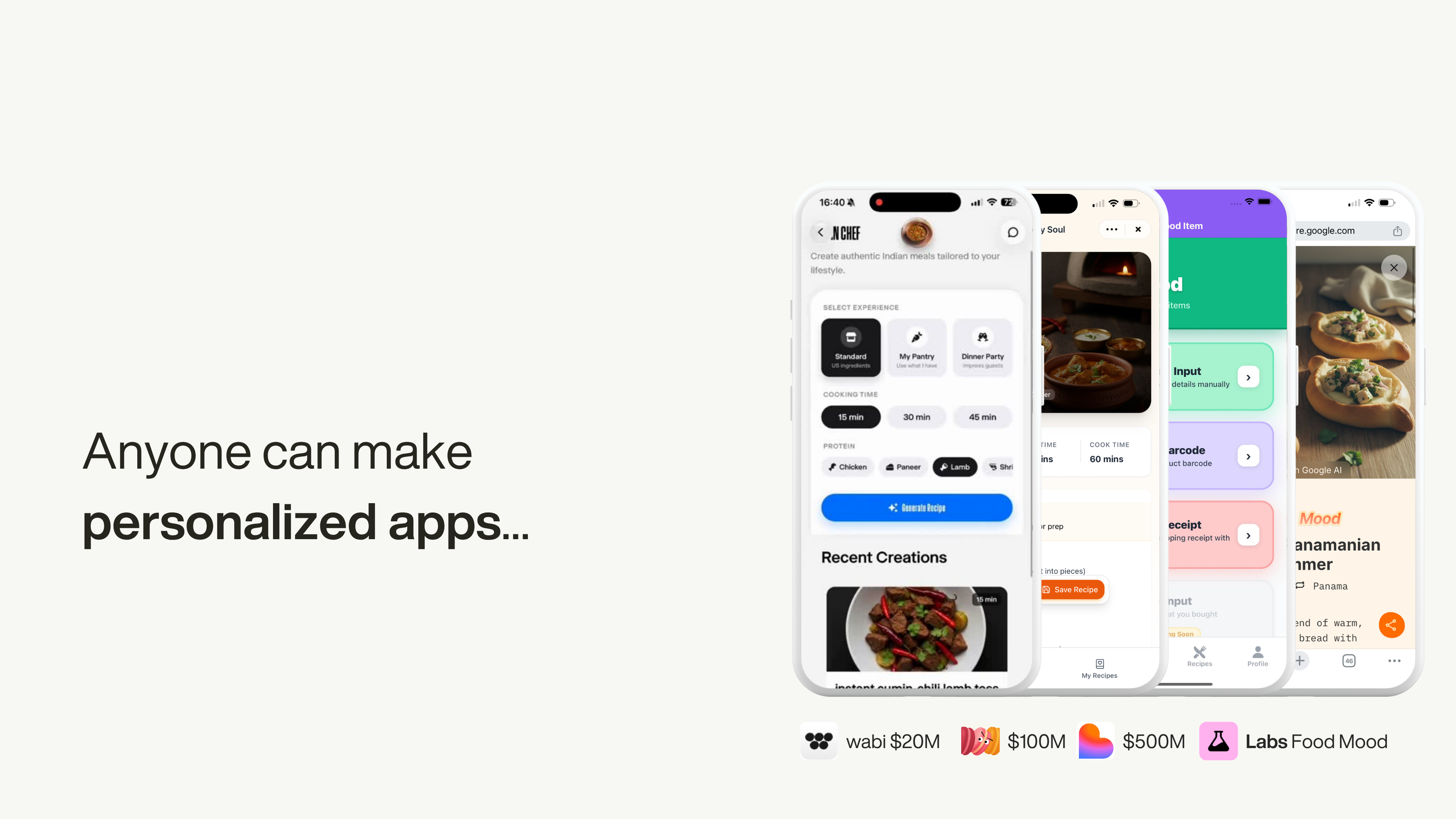
The proof is that everyone already has. There is a whole shelf of AI-built personalized recipe apps.
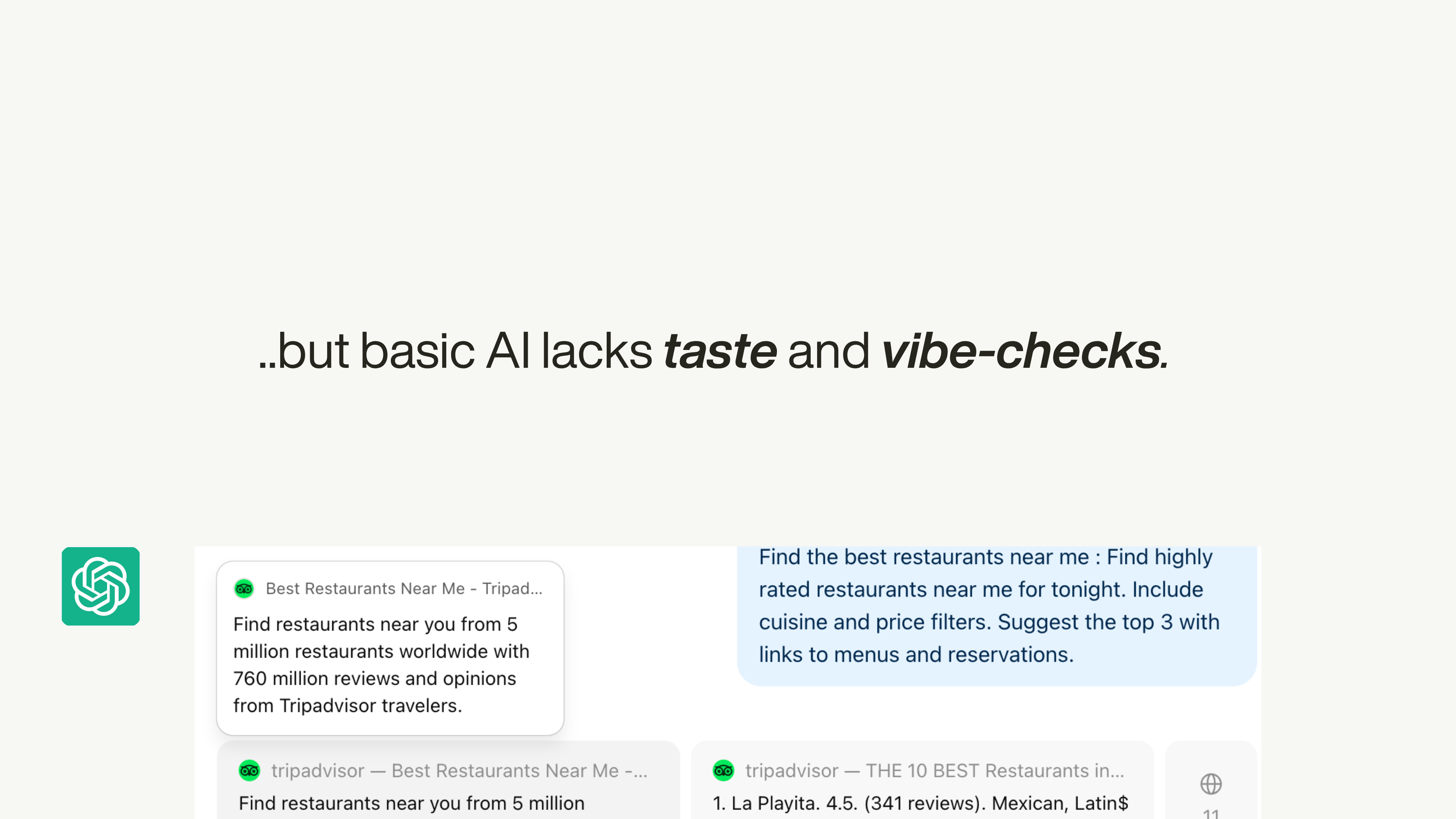
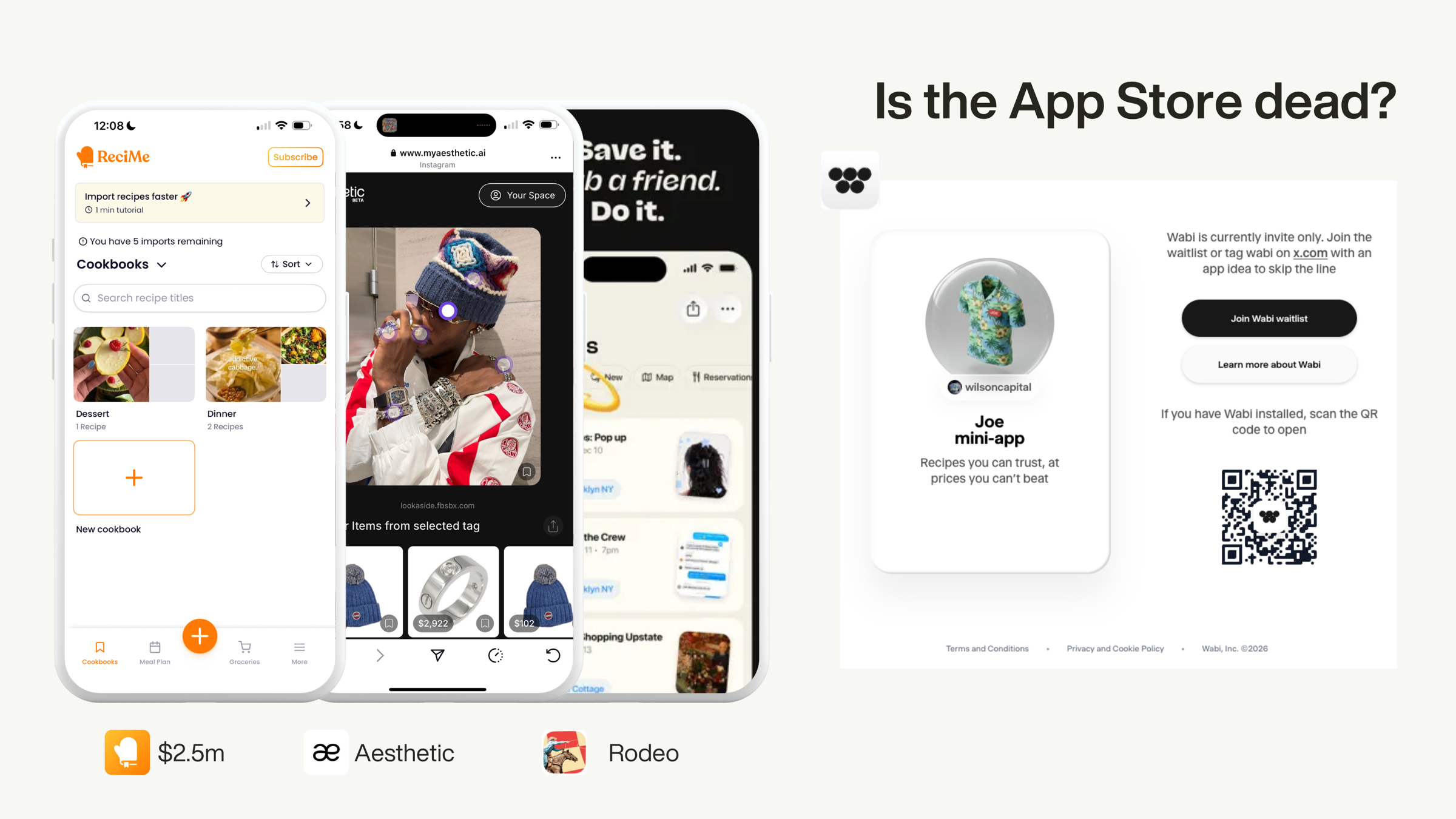
Ask a generic model for the best restaurants near you and it returns Tripadvisor. Accurate, and no help — it has no taste, and it cannot vibe-check. Meanwhile distribution is moving off the App Store entirely: recipe apps living inside social feeds.
So the bottleneck moved. It is not a coding problem anymore, it is a data collection problem. Personal data is fragmented and scattered across the apps where personal tasks actually start — media, messaging and notes — and none of it is reachable by the agent that would need it.
Why work life got solved first
Every large company shipped an agent for the office before it shipped one for the kitchen, and the reason is not that consumers matter less.
Professional workflows are explicit, outcomes are measurable, and context is relatively structured and permissioned.
Personal life breaks all three assumptions. Every household runs a workflow it has never written down, and the gap is structural rather than accidental.
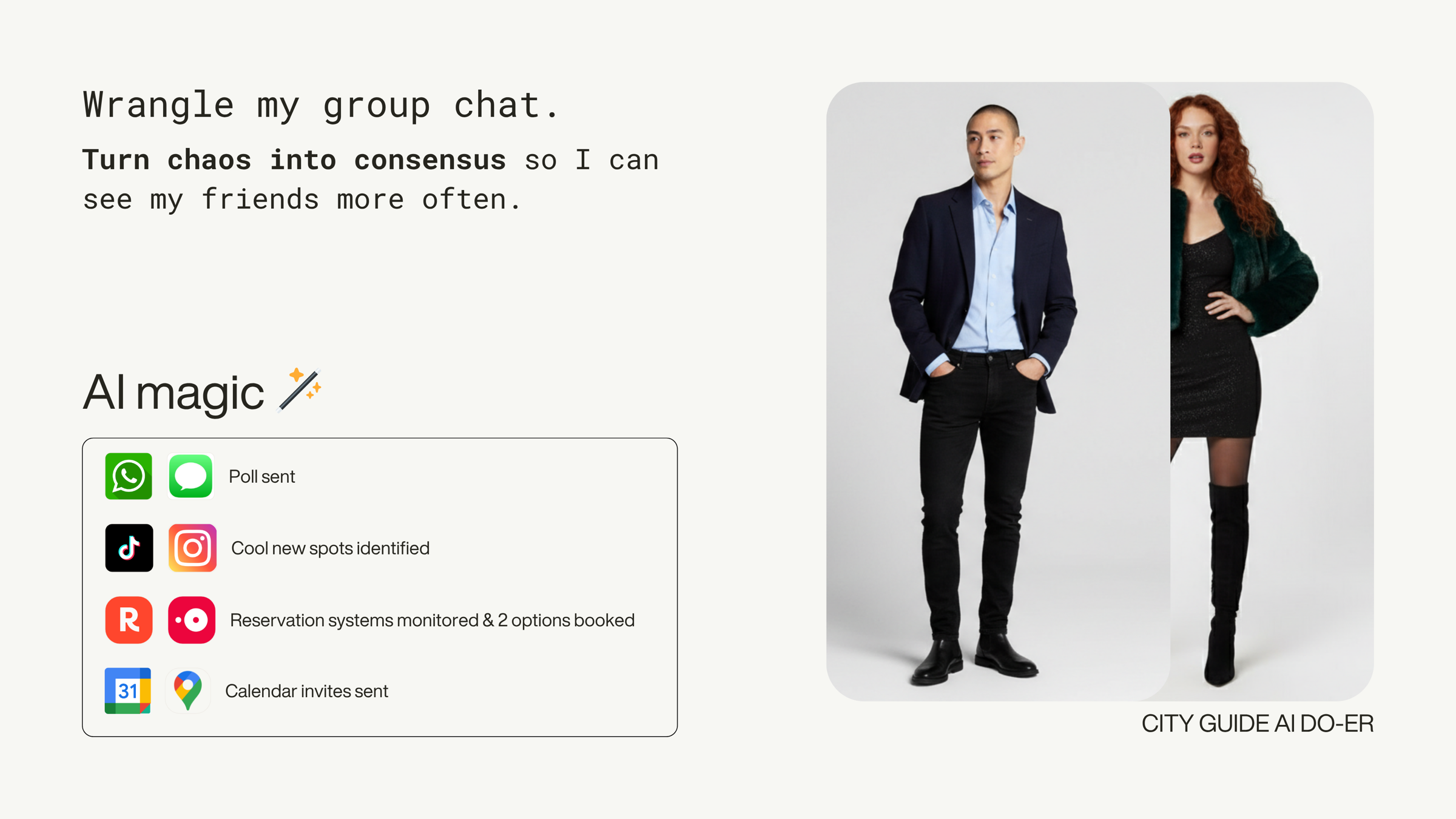
How would anyone actually solve this?
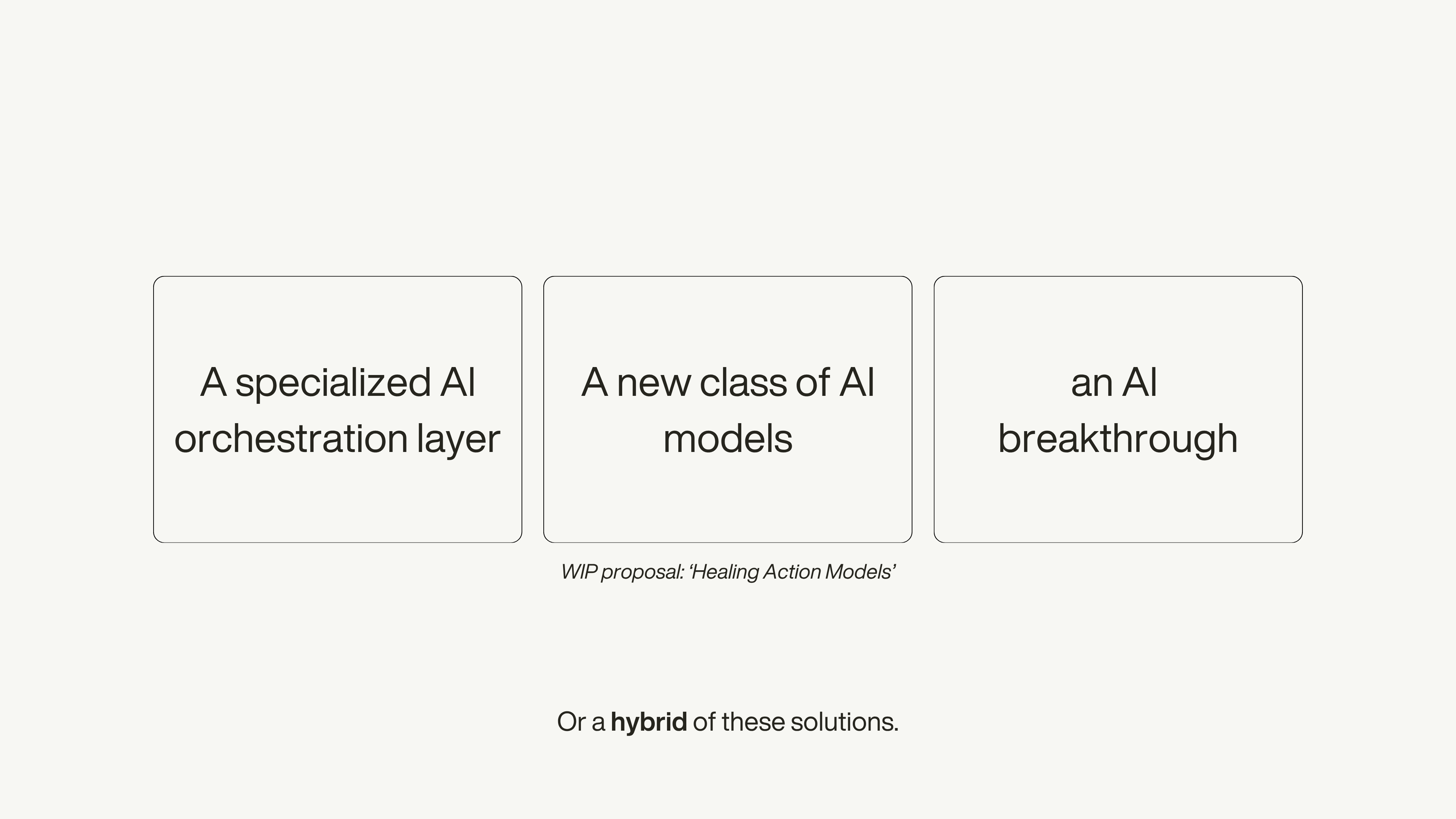
Three (or more) candidate routes: a specialized AI orchestration layer, a new class of AI models — a working name for it is Healing Action Models (concepted w/ founder friend Ross Ingram), for something optimized to notice failure and repair it — or a straight AI breakthrough. Most likely a hybrid.
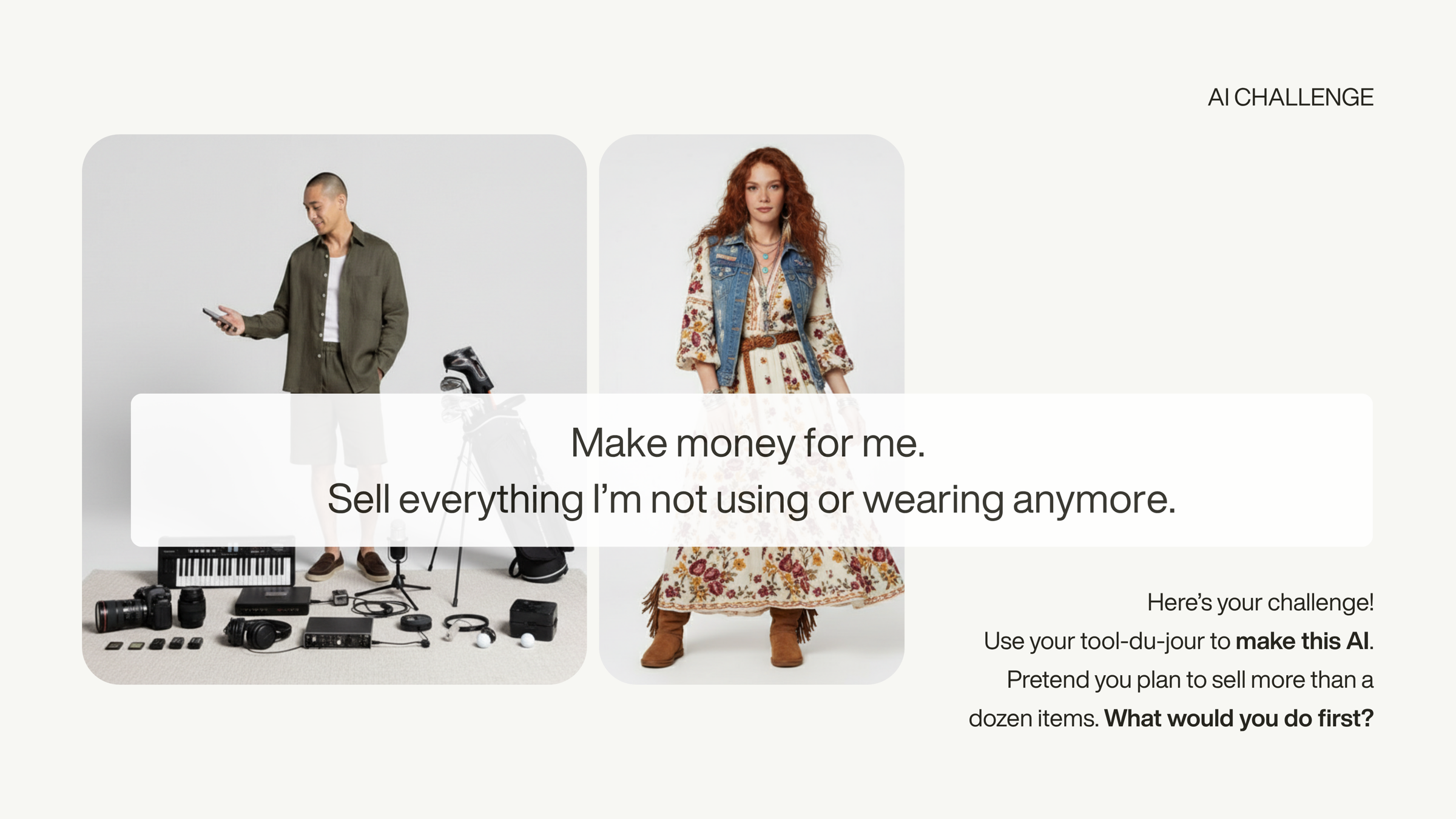
If you want to feel the shape of the problem yourself, take the challenge I put to rooms: build the AI that sells everything you are not using or wearing anymore. More than a dozen items. What do you do first?